Short answer
The most common bulldog health problems are breathing trouble, skin allergies and fold infections, joint problems, eye conditions such as cherry eye, and ear infections — all made worse by extra weight and heat. Most are manageable with daily care and early vet visits, and the serious ones show clear warning signs.
What are the most common bulldog health problems?
Bulldogs are wonderful dogs, but they are not low-maintenance when it comes to health. Their flat faces, loose skin, heavy builds and short legs — the very things that make them look like bulldogs — are also the source of most of their health problems. The good news is that the list is short, the warning signs are clear, and most problems are far easier to deal with when they are caught early. The table below is the whole picture in one place; the rest of this guide takes each problem in turn.
| Problem | Bulldogs most affected | First signs to watch for | How urgent |
|---|---|---|---|
| Breathing problems (BOAS) | All three breeds | Noisy breathing, snoring, tiring quickly | See the vet soon; an emergency if struggling to breathe |
| Skin allergies | All three breeds | Itchy paws, red belly, ear infections | See the vet soon |
| Wrinkle and tail-pocket infections | English Bulldog mainly | Redness, smell or discharge in the folds | Treat promptly; vet if it spreads |
| Hip dysplasia and joint problems | English and American Bulldogs | Stiffness, limping, reluctance to climb stairs | See the vet soon |
| Cherry eye | All three breeds, often young dogs | Red swelling in the corner of the eye | See the vet soon |
| Ear infections | All three breeds, often with allergies | Head shaking, scratching, smell from the ear | Treat promptly |
| Heatstroke | All three breeds | Heavy panting, drooling, wobbling | Emergency — cool the dog and see a vet now |
| Carrying too much weight | All three breeds | No waist from above, ribs hard to feel | Act now — it worsens breathing and joints |
Two things make almost every problem on this list worse: extra weight and heat. A bulldog carrying too much weight breathes harder, puts more strain on its joints and copes worse in warm weather — and a bulldog that overheats can go from uncomfortable to an emergency in minutes. That is why weight and heat run through this whole guide, and why the weight and heat sections below link to the tools that help you check both.
Breathing problems and BOAS
Bulldog health problems often start with breathing. Brachycephalic means flat-faced: the skull is shortened, but the soft tissue inside it is not, so the airway is crowded from the start. In bulldogs that crowding often becomes brachycephalic obstructive airway syndrome — BOAS — a group of problems that narrow the airway at several points at once. The Merck Veterinary Manual describes the usual combination: narrowed nostrils (stenotic nares), an over-long soft palate that hangs into the throat, tissue from the voice box turning inside out (everted laryngeal saccules), and, in English Bulldogs especially, a narrower windpipe than normal (hypoplastic trachea).
Most bulldogs snore, and a quiet snore during deep sleep is common. But loud, laboured breathing while awake, snorting, gagging, tiring after a short walk, or struggling in warm weather are signs of obstruction, not just a bulldog trait — the University of Cambridge’s BOAS research group notes that dogs with a normal upper airway breathe quietly, and that respiratory noise is an indicator of obstruction.
What helps: keep your bulldog slim, because fat tissue around the airway narrows it further; use a harness instead of a collar, which pulls on the throat; walk in the cool parts of the day and never exercise a bulldog hard in heat; and keep them calm, because excitement and stress make breathing harder. For dogs with moderate or severe BOAS, vets can grade the airway and, where needed, refer for surgery to open the nostrils and shorten the soft palate. If your bulldog’s breathing changes — louder, faster or harder than usual — that is a vet visit, not a wait-and-see. Our guide to bulldog breathing issues explains each of these problems in more detail.
Skin problems: allergies, wrinkles and tail pockets
Skin is the second most common trouble area, and it usually starts with allergies. Bulldogs are prone to atopic dermatitis — an allergy to things in the environment such as pollen, dust mites or mould — and to food allergies. The signs are itching, red or sore skin, and the classic giveaway: a bulldog that licks or chews its paws. Our bulldog allergies guide covers the causes, the signs and what your vet can do, and our guide to bulldog licking paws explains why paw-licking is so often an allergy sign rather than a habit.
The folds and wrinkles need daily attention of their own. Warmth and moisture collect inside a fold, and bacteria and yeast grow in it — the result is skin fold dermatitis: red, sore, smelly skin that gets worse quickly if it is left alone. Wipe the folds once a day with a damp cloth or a vet-approved wipe, dry them properly afterwards, because moisture left behind is the problem, and check the tail pocket the same way — the deep fold above the tail in English Bulldogs is one of the easiest places for an infection to hide. Our tail pocket cleaning guide shows the routine step by step, and our grooming guide explains what happens when fold care is skipped.
Joint and spine problems
Heavy, short-legged dogs put a lot of load on their joints. Hip dysplasia — where the ball of the hip joint does not sit properly in its socket — is one of the health issues the American Kennel Club lists for Bulldogs, and it usually shows up as stiffness after rest, limping, a reluctance to climb stairs, or a “bunny-hopping” run. It cannot be fixed at home: weight control and gentle, regular exercise help, but a limping bulldog needs a vet assessment, and some dogs need surgery.
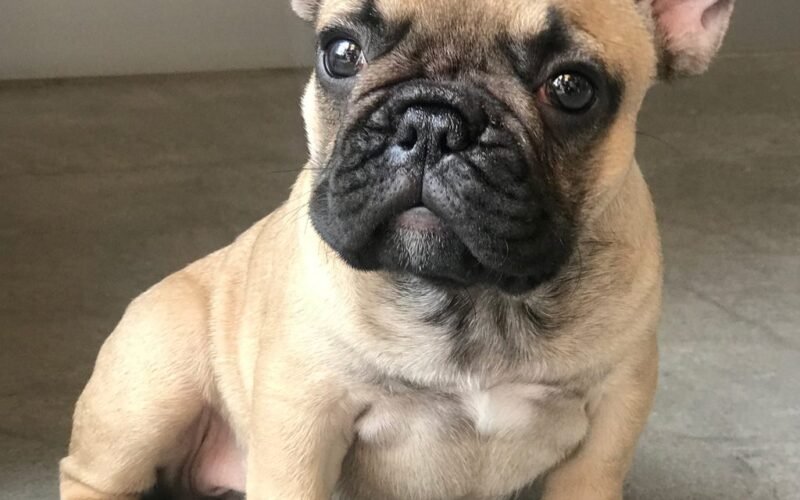
French Bulldogs are also prone to slipped discs (intervertebral disc disease), because their short legs and compact spines put extra strain on the discs between the vertebrae. A sudden yelp when touched, a wobbly back end, or a dog that will not jump or climb is a same-day vet visit — spinal problems get worse fast, and early treatment makes a real difference. The same applies to kneecaps that slip out of place (luxating patella), which the American Kennel Club lists for French Bulldogs: a dog that skips a step or holds a back leg up for a few strides, then walks normally again, should be checked.
Eye problems: cherry eye, dry eye and entropion
Cherry eye is the eye problem most bulldog owners meet first. It is a prolapse of the gland of the third eyelid: the gland pops out and appears as a smooth red swelling in the corner of the eye, usually in a young dog. It looks alarming but is not usually painful at first — still, see your vet promptly, because the gland makes a large share of the eye’s tears, and leaving it out can lead to dry eye later. Modern treatment usually puts the gland back where it belongs rather than removing it, so do not try to push it back yourself.
Dry eye is the opposite problem: the eye does not make enough tears, so it looks dull, sore and sticky, and infections follow. It is diagnosed with a simple tear test at the vet and treated with daily drops. Entropion — an eyelid that rolls inward so the lashes rub the eye — also needs a vet; a bulldog that squints, paws at its eye or has a watery, cloudy eye should be seen the same day.
Ear infections
Bulldog ears are narrow, warm and often linked to the same allergies that affect the skin, so ear infections are common — and they come back if the allergy behind them is not dealt with. The signs are head shaking, scratching at the ears, a smell from the ear, or dark discharge. Clean the outer ear once a week with a vet-approved ear cleaner and cotton wool, never pushing anything deep into the canal, and never use cotton buds inside the ear. If the ear is red, painful or smelly, or your bulldog keeps shaking its head, that is a vet visit: infections left alone can damage hearing, and a vet needs to check whether the eardrum is intact before any drops go in.
Weight: the health problem you can prevent
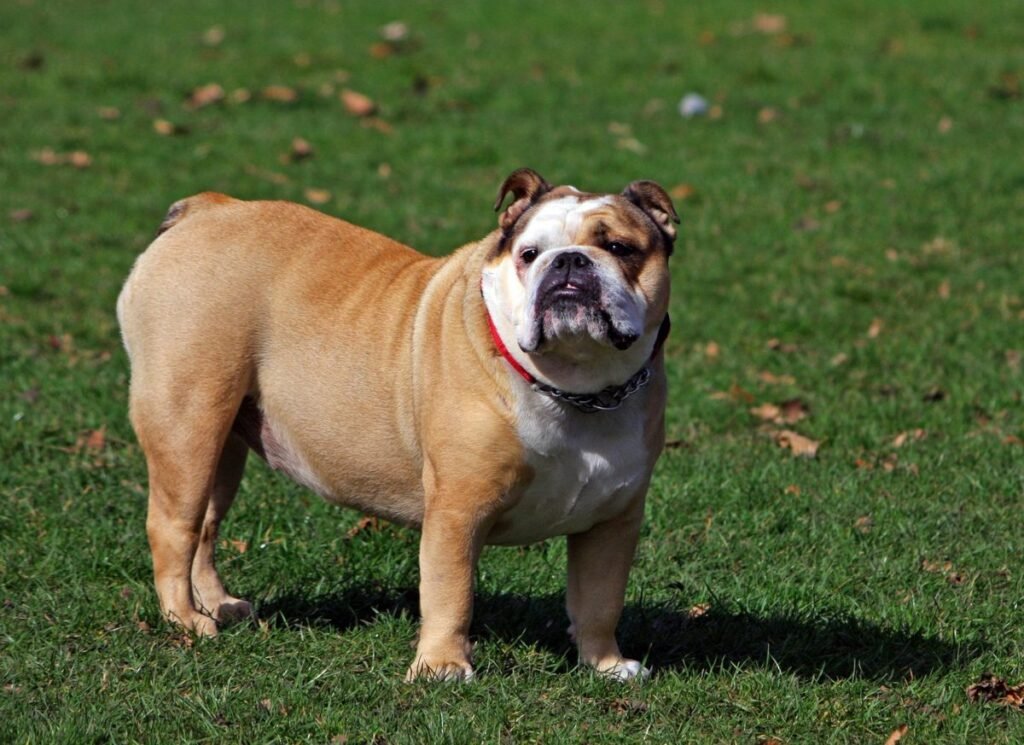
A bulldog’s weight is the one health problem you can fully control — and it affects every other problem on this list. Extra fat narrows the airway, loads the joints, makes heat harder to cope with, and shortens the dog’s comfortable life. The breed standard gives you the target: an adult male English Bulldog should weigh about 50 lb (23 kg) and a female about 40 lb (18 kg), according to the American Kennel Club. A 23 kg English Bulldog that actually weighs 29 kg is carrying 6 kg it does not need — roughly a quarter over its healthy weight — and that quarter is enough to turn mild breathing trouble into a daily struggle.
Our Dog Weight Calculator compares your dog against the growth curves for each breed, so you can see exactly where your bulldog stands — check its weight against the calculator before you change anything about feeding. Our weight guide explains how to check body condition by feel, and our feeding guide shows how much to feed by age and weight.
Heat: why bulldogs overheat so easily
Bulldogs cool themselves almost entirely by panting, and a narrowed airway makes panting less effective — so a bulldog can overheat in weather another dog would find pleasant. Heatstroke is the most urgent problem in this guide: heavy panting, thick drooling, a wobbly walk, vomiting or collapse mean cool the dog with tepid (not ice-cold) water, get air moving over them, and get to a vet immediately — do not wait to see if they improve. Our heat guide sets out the safe temperatures for walking a bulldog, and the walking temperature chart shows the risk at each temperature, so you can plan walks for the cool hours and skip them entirely on hot days.
Feeding for health
Bulldog health problems can be eased by feeding. Feeding is health care for a bulldog: measured meals, a food that suits the dog’s age and weight, and treats kept to a small share of daily calories. Bulldogs gain weight easily and beg convincingly, so the amount matters more than the brand. Our feeding guide works through how much to feed by age and weight, using the same resting-energy formula behind our feeding calculator.
A daily care routine that prevents most problems
Most bulldog health problems are caught — or prevented — by a short daily routine. Ten minutes a day covers it:
- Listen to your bulldog breathing at rest — quiet is normal; new noise is a note for the vet.
- Wipe the face folds and the tail pocket, then dry them.
- Check the ears for smell, redness or discharge.
- Look at the eyes — clear and bright, no redness, no swelling, no squinting.
- Check the paws for redness, licking or sores between the toes.
- Feel the ribs — you should feel them easily under a thin layer of fat, and see a waist from above.
- Walk in the cool hours, with water, and watch for heavy panting.
- Weigh your bulldog weekly while it is growing or slimming, and write the number down.
When to see the vet urgently
See a vet the same day — or go to an emergency vet — if you see any of these:
- Struggling to breathe, blue or very pale gums, or collapse
- Heavy panting and drooling with wobbling or vomiting in warm weather (heatstroke)
- A sudden yelp, wobbly back legs, or a dog that cannot stand
- An eye that is swollen shut, cloudy, or suddenly painful
- A swollen, tight belly with retching but nothing coming up
- Vomiting or diarrhoea with blood, or a dog that has not eaten or drunk for a day
- A wound, fold or tail pocket that is spreading, smelly or oozing
Anything on this list is a vet visit, not an internet search. Bulldogs hide discomfort well, so a change in breathing, appetite or behaviour is worth a call to the vet even if it is not on this list.
Frequently asked questions
Are bulldogs unhealthy dogs?
Bulldogs have more health issues than the average breed, because the flat face, loose skin and heavy build that define them also cause breathing, skin and joint problems. That does not mean every bulldog is sick: good breeding, a healthy weight, daily fold care and early vet visits keep most bulldogs comfortable, and many live full lives within the breed’s expected lifespan.
What is the most common health problem in bulldogs?
Breathing problems are the most common and the most serious — most bulldogs have some degree of airway narrowing, and it affects everything from exercise to heat tolerance. Skin allergies and fold infections are the next most common, followed by joint problems and eye conditions such as cherry eye.
How long do bulldogs live?
English Bulldogs live 8–10 years on average, and French Bulldogs and American Bulldogs 10–12 years, according to the American Kennel Club. Weight control, avoiding heat stress and regular vet care help every bulldog reach the upper end of that range.
Do bulldogs need their wrinkles cleaned every day?
Yes — a quick daily wipe of the face folds and tail pocket, dried properly afterwards, prevents most fold infections. It takes a minute, and it is the single most useful daily habit for a bulldog’s skin. Our grooming guide explains the routine and what happens when it is skipped.
When should I worry about my bulldog’s breathing?
Worry when breathing is noisy while your dog is awake and resting, when they tire quickly on a short walk, struggle in warm weather, gag or retch often, or sleep sitting up to breathe more easily. Any of those is a vet visit — and blue gums, collapse or struggling to breathe is an emergency.
Sources and notes: Breathing and BOAS follow the Merck Veterinary Manual’s description of brachycephalic airway syndrome and the University of Cambridge BOAS research group’s pages on recognition and diagnosis. Breed standards, weights and lifespans are from the American Kennel Club breed standard for the Bulldog and the French Bulldog. Weight figures match the site’s own Dog Weight Calculator dataset and the weight guide. Feeding amounts follow the site’s feeding guide. This article is educational guidance, not veterinary advice — if your bulldog’s breathing, appetite or behaviour changes, speak to your vet. The Fluffy Bulldog is run by Liam K. — read more on the About page.
Not sure where to start?
Try one of our free bulldog tools — weight, feeding, walking-temperature and more.
Browse all free tools