
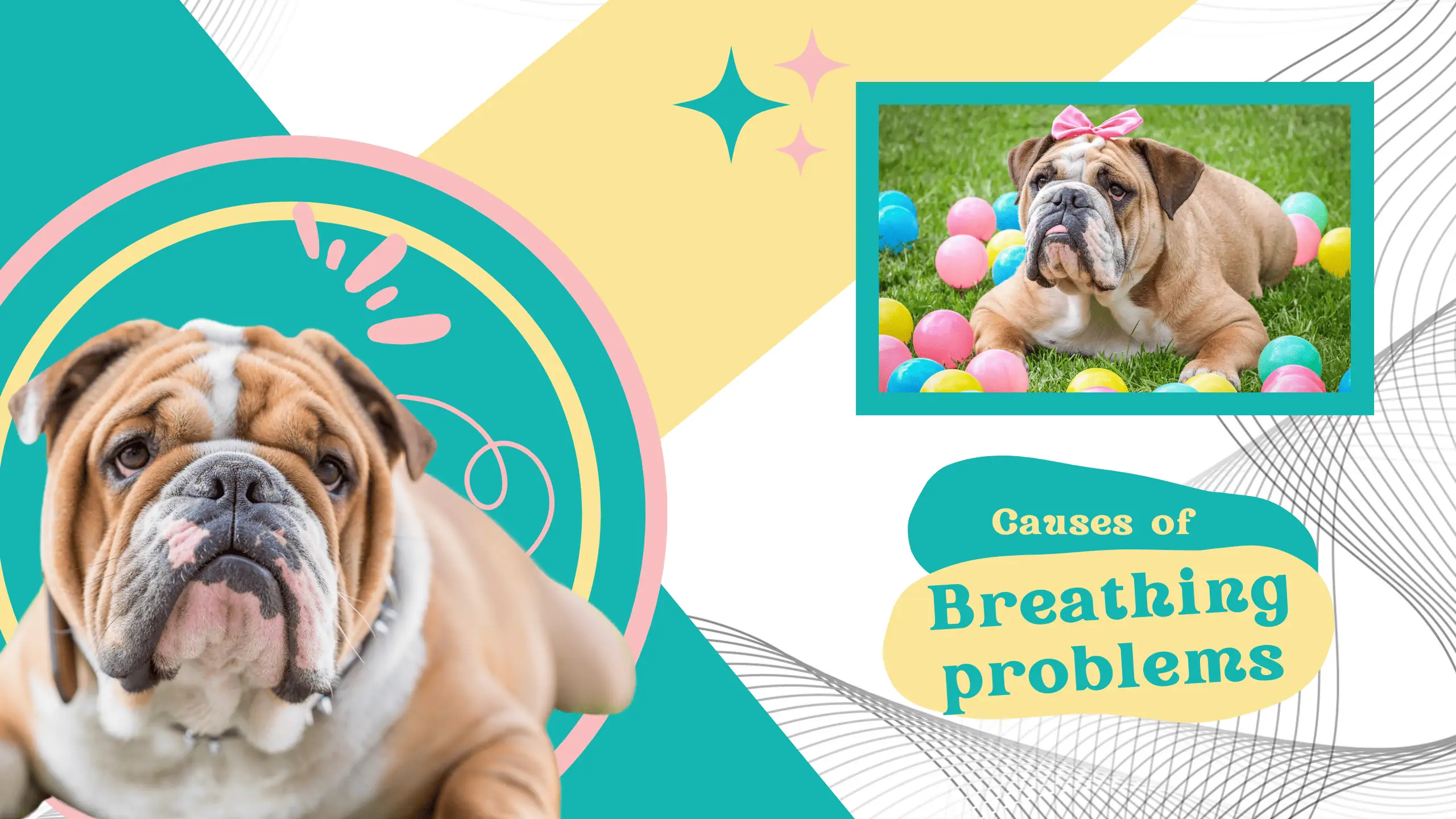
Bulldog Breathing Issues: Causes, Care & Owner’s Guide
If you’ve ever watched your bulldog sleep and thought, is that normal? — you’re not alone. That snoring, snorting, and occasional wheeze is one of the first things new bulldog owners notice. Sometimes it’s just part of the breed’s charm. But bulldog breathing issues can also be a genuine health concern that gets worse over time if you don’t know what to watch for.
This guide covers what causes breathing problems in bulldogs, which symptoms are red flags, and what you can actually do to help your dog breathe more comfortably — without overcomplicating it.
Why Bulldogs Struggle to Breathe: The Anatomy Behind It
Bulldogs weren’t always the flat-faced breed we know today. Selective breeding over generations compressed the skull while the soft tissue inside — the palate, nostrils, and trachea — didn’t shrink at the same rate. The result is a dog with more tissue than space to put it.
This structural mismatch is what vets call brachycephalic obstructive airway syndrome, or BOAS. It’s not a single condition — it’s a collection of anatomical abnormalities that all restrict airflow in different ways.
The Four Main Structural Problems
1. Stenotic nares — abnormally narrow nostrils that restrict how much air can enter with each breath. If you look at your bulldog head-on and the nostrils appear nearly pinched shut, that’s stenotic nares.
2. Elongated soft palate — the soft tissue at the back of the throat extends too far and partially blocks the airway. This is one of the most common causes of loud breathing and snoring in bulldogs.
3. Hypoplastic trachea — a windpipe that’s narrower than it should be relative to the dog’s body size. This is more common in English Bulldogs than French Bulldogs and significantly limits airflow throughout the entire respiratory system.
4. Everted laryngeal saccules — small pouches in the larynx that get sucked into the airway when a dog is working too hard to breathe. This usually develops as a secondary problem from the others.
Not every bulldog has all four. But most bulldogs have at least one, and many have a combination.
Bulldog Respiratory Problems: Normal vs. Warning Signs
There’s a difference between “this is how bulldogs sound” and “this dog needs a vet today.” Knowing that line is one of the most important things you can learn as a bulldog owner.
What’s Generally Considered Normal
- Snoring during sleep
- Light snorting when excited
- Slightly louder breathing than non-brachycephalic breeds
- Brief snuffling after drinking water
These are typical of the breed and don’t automatically signal a problem that requires intervention.
Warning Signs That Warrant a Vet Visit
- Open-mouth breathing at rest — bulldogs should be able to breathe through their nose when calm. Mouth breathing at rest means they’re working too hard.
- Blue or purple-tinged gums — this is an emergency. It signals the dog isn’t getting enough oxygen.
- Gagging or regurgitation frequently — often linked to elongated soft palate irritating the throat.
- Collapse or extreme fatigue after minimal exercise — not just being a lazy breed; actual sudden weakness is a red flag.
- Breathing that gets progressively louder or more labored over weeks — gradual worsening should be evaluated, not assumed as normal aging.
How to Help a Bulldog with Breathing Problems at Home
Managing bulldog breathing issues doesn’t always mean surgery — though sometimes it does. Much of what you can do comes down to environment, exercise habits, and weight management.
Keep the Environment Cool
Heat is the fastest way to push a bulldog’s respiratory system into distress. Unlike breeds that pant efficiently to cool down, bulldogs can’t regulate body temperature well because their airway is already restricted.
During summer months or in warm climates, keep your bulldog in air-conditioned spaces as much as possible. Avoid walks during the hottest parts of the day — early morning or evening walks are safer. Never leave a bulldog in a car, even briefly.
Manage Weight Carefully
Extra weight means extra tissue pressing against an already-compromised airway. Studies have consistently linked obesity in brachycephalic dogs to worse BOAS outcomes.
Too Keep your Bullodg Healthy Check their weight
A lean bulldog breathes noticeably better than an overweight one. If your vet says your bulldog is carrying extra weight, take the dietary advice seriously — it’s not cosmetic, it’s respiratory.
Use a Harness, Not a Collar
Any pressure on the neck can aggravate breathing problems. A well-fitted harness distributes pressure across the chest instead. This is a simple change with a real impact on daily comfort.
Elevated Food and Water Bowls
Eating with the head down can cause bulldogs to take in more air during meals, leading to regurgitation and increased breathing effort. Slightly elevated bowls — not dramatically raised, just off the floor — can reduce this.
What Is Brachycephalic Obstructive Airway Syndrome in Bulldogs?
Brachycephalic obstructive airway syndrome (BOAS) is a collection of upper airway abnormalities common in flat-faced breeds like Bulldogs, Pugs, and French Bulldogs. It includes stenotic nares, elongated soft palate, and tracheal narrowing — each of which restricts airflow and forces the dog to work harder to breathe, causing chronic respiratory strain.
That’s the short answer for anyone landing on this page looking for a quick definition. Here’s what it means practically:
BOAS is a spectrum. Some bulldogs live their whole lives with mild BOAS and need no intervention beyond management. Others develop progressive symptoms that make surgery necessary. The key is catching where your dog falls on that spectrum early, before secondary problems like everted saccules develop.
The typical BOAS assessment at a vet involves listening to breathing sounds, grading nostrils, possibly a laryngoscopic exam under sedation, and sometimes a whole-body barometric plethysmography test (available at specialist clinics). Ask your vet about a BOAS grading score — it gives you a baseline to monitor over time.
Surgical Options for Severe Bulldog Breathing Issues
When airway abnormalities are significant enough to cause chronic distress, surgery is the most effective solution. The most common procedures are:
Nare widening (alarplasty) — removes a small wedge of tissue from the nostril to open the airway. Recovery is quick and results are often dramatic. Many vets recommend doing this early, even in puppies.
Soft palate resection — shortens the elongated palate. Done under general anesthesia, usually alongside nare widening.
Saccule removal — if laryngeal saccules are already everted, they can be removed during the same procedure.
The earlier these corrections are made, the better. Dogs corrected at a young age — before secondary changes set in — have significantly better long-term outcomes than those treated later.
“BOAS surgery outcomes in bulldogs” → peer-reviewed veterinary surgery study
Common Mistakes Bulldog Owners Make Around Breathing
Assuming all breathing noise is normal. The breed does breathe loudly, but progressive worsening is not something to normalize. Get a baseline assessment from your vet while your dog is young so you have something to compare against.
Exercising during heat. This one sends bulldogs to emergency vets every summer. Even a 15-minute walk in 85°F heat can tip a bulldog into respiratory distress. The breed’s cooling mechanism is genuinely compromised.
Waiting too long to discuss surgery. Many owners feel surgery sounds extreme and delay consulting a specialist. But early corrective procedures — especially nare widening — are relatively minor and prevent the cascade of secondary problems that come from years of labored breathing.
Ignoring weight creep. A few extra pounds on a bulldog is not “just being stocky.” It directly worsens airway compression. Talk to your vet about a target weight and stick to it.
FAQ: Bulldog Breathing Issues
Why does my bulldog breathe so loud at night?
Bulldogs snore because their soft palate and narrow nostrils partially obstruct airflow — especially when lying down, which shifts tissue toward the throat. Light snoring is typical. If the noise is significantly worsening or your dog seems to gasp or wake itself up, have it evaluated for BOAS.
At what age do bulldog breathing problems start?
Most bulldogs show some level of breathing noise from puppyhood. Symptoms can worsen between 1–3 years as the dog grows and soft tissue matures. This is also the window where early corrective surgery has the most impact.
Is surgery the only option for BOAS in bulldogs?
Not always. Mild to moderate cases are managed through weight control, avoiding heat, using a harness, and limiting strenuous exercise. Surgery becomes the recommended path when the dog is in chronic distress, showing secondary airway changes, or graded at a higher BOAS severity level.
Can bulldogs live a normal life with breathing issues?
Many do, especially with proactive management and early intervention when needed. The key is knowing your individual dog’s baseline, monitoring for changes, and working with a vet who understands brachycephalic breeds specifically.
Final Thoughts for Bulldog Owners
Bulldogs are worth every quirk — including the breathing sounds that come with the territory. But being a responsible bulldog owner means understanding that those sounds have a structural cause, and that cause sits on a spectrum from “totally manageable” to “needs attention now.”
Get a vet who takes BOAS seriously. Know the difference between normal breed sounds and genuine warning signs. Keep your bulldog lean and cool. And don’t put off a conversation about corrective options if your dog’s breathing is clearly labored — early action almost always leads to better outcomes.
Your bulldog can’t tell you when something feels off. Knowing what to look for is how you speak for them.
Pingback: minoxidil scientific review
Pingback: vardenafil 10 mg dose reference
Pingback: avanafil mechanism overview
Pingback: vardenafil renal contraindications