Short answer
English Bulldog vs French Bulldog: English Bulldogs are calm, medium-sized dogs at 40–50 lb; French Bulldogs are small, playful companions under 28 lb; American Bulldogs are large, athletic working dogs at 60–120 lb. All three are flat-faced, loyal and people-focused, but they need different amounts of space, exercise and vet care, so the right breed depends on your home, your activity level and your experience.
English Bulldog vs French Bulldog: what’s the difference?
The first thing to know is that “bulldog” is not one breed. The English Bulldog, the French Bulldog and the American Bulldog are three separate breeds with different sizes, histories and needs — and the differences between them are bigger than the differences between many unrelated breeds. An adult American Bulldog can weigh four times as much as an adult French Bulldog, and an English Bulldog can weigh twice as much as a Frenchie. Choosing between them without knowing those differences is how people end up with a dog that does not fit their home.
The English Bulldog is the original. It descends from the bull-baiting dogs of England, and the American Kennel Club (AKC) recognised the breed in 1886. It is a medium-sized, heavily built dog with a wide chest, loose skin, a pushed-in face and a calm, stubborn character. The French Bulldog came later: small “toy” bulldogs were taken from England to France by lace workers in the 1800s, and there they were crossed with local dogs to produce a smaller companion with upright “bat” ears. The Frenchie is now a separate breed, not a miniature English Bulldog. The American Bulldog descends from the working farm dogs brought to the American South, where they guarded property and worked livestock, and it is recognised by the United Kennel Club (UKC) rather than the AKC. It stayed a working dog, which is why it is so much bigger, taller and more athletic than the other two.
Those histories explain almost everything else about the three breeds. The English Bulldog was bred to be a calm companion, the French Bulldog to be a small city companion, and the American Bulldog to work all day on a farm.
Bulldog breeds compared: size, weight and lifespan
The table below gives the comparison in one place, using the AKC breed standards for the English and French Bulldogs, the UKC standard for the American Bulldog, and this site’s own weight data. Size drives almost every practical question — how much they eat, how much space they need, how much they cost to feed, and how easy they are to handle — so it is worth getting clear first.
| English Bulldog | French Bulldog | American Bulldog | |
|---|---|---|---|
| Height at shoulder | 14–15 inches (36–38 cm) | 11–13 inches (28–33 cm) | 20–28 inches (51–71 cm) |
| Adult weight | 40–50 lb (18–23 kg) | Under 28 lb (up to 13 kg) | 60–120 lb (27–54 kg) |
| Lifespan | 8–10 years | 10–12 years | 10–12 years |
| Build | Short, stocky, wide-chested | Small, compact, muscular | Tall, large, powerfully muscled |
| Coat | Short, smooth | Short, smooth | Short, smooth |
| Recognised by | AKC (since 1886) | AKC | UKC (not AKC) |
| Energy level | Low | Low to moderate | High |
| Best for | Calm homes, families | Flats, first-time owners | Active owners with space |
The weight figures in this table are the same ones behind our Dog Weight Calculator, which compares your dog against the growth curves for each breed. The English Bulldog figures sit on the AKC standard of about 50 lb for mature males and about 40 lb for mature females; the French Bulldog range follows the AKC standard, which caps the breed at 28 lb; and the American Bulldog range follows the UKC standard, with males at roughly 70–120 lb and females at roughly 60–100 lb. Our weight guide gives the full charts by age and breed if you want to check a puppy’s growth against them.
Lifespan is the other number in the table that should shape your choice. English Bulldogs live 8–10 years on average, the shortest of the three, while French and American Bulldogs both average 10–12 years. Those are averages, and individual dogs vary, but the pattern is consistent: the English Bulldog’s heavier build and more extreme flat face carry a higher health burden, and that shows in how long they live.
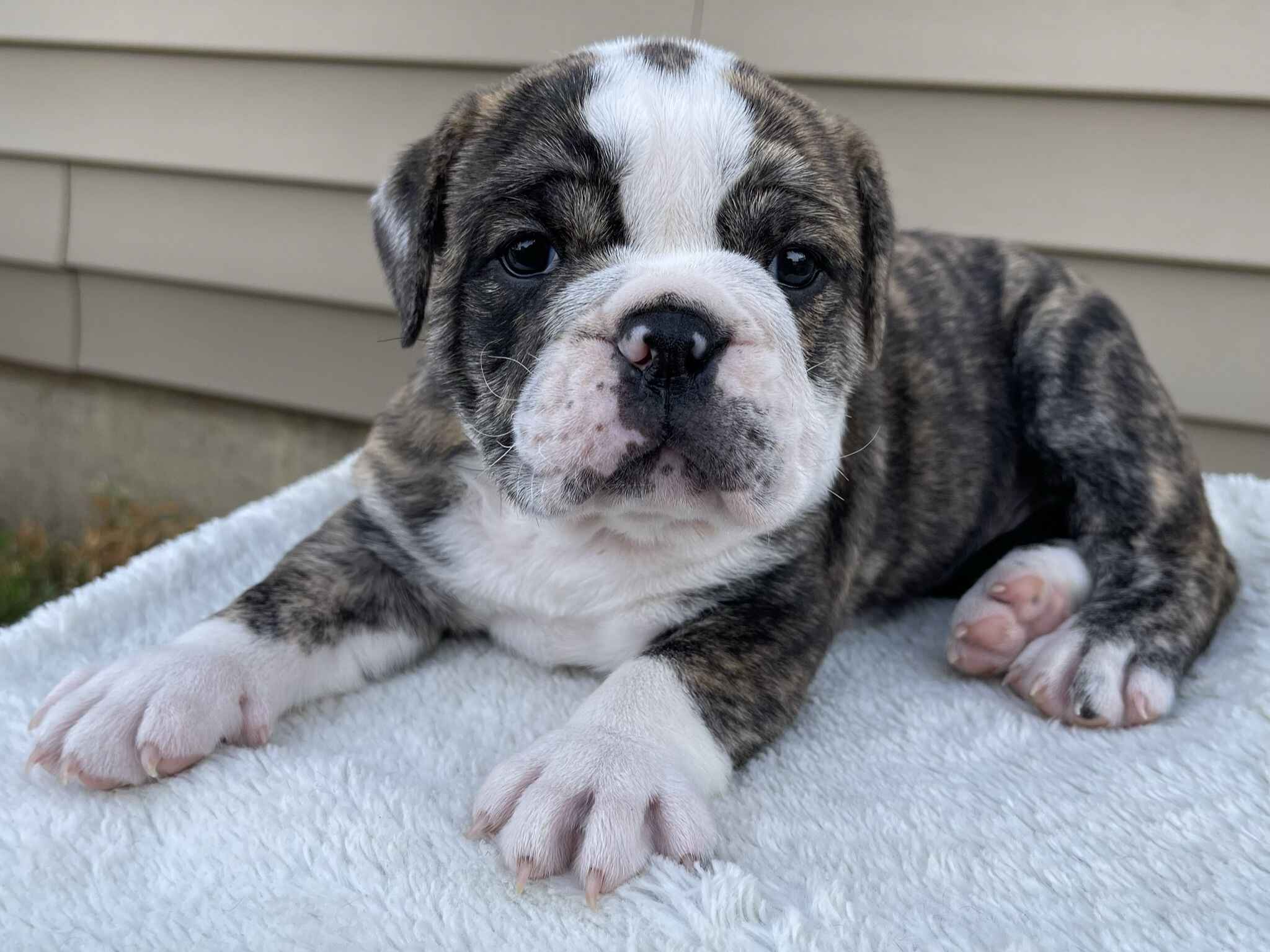
The English Bulldog
The English Bulldog is the dog most people picture when they hear the word “bulldog”: low, wide, wrinkled, with a heavy jowl, an undershot jaw and a slow, rolling walk. It stands 14–15 inches at the shoulder and weighs 40–50 lb as an adult, with males at the top of that range and females at the bottom. Its coat is short and smooth and comes in brindle, white, red, fawn and piebald, and it sheds moderately all year.
Temperament is where the English Bulldog wins most of its fans. The AKC describes the breed as friendly, courageous and calm, and that is an accurate summary. English Bulldogs are famously steady: affectionate with their families, generally good with children, usually tolerant of other pets, and rarely in a hurry about anything. They are also famously stubborn. An English Bulldog that has decided not to move will not move, and training works best with patience, food rewards and short sessions rather than repetition and force.
Exercise needs are low, which is part of the breed’s appeal for people who do not want a dog that demands long walks. Two short, gentle walks a day plus play in the garden is enough for most English Bulldogs, and in warm weather even that has to be cut back — flat-faced dogs overheat quickly, and the English Bulldog is one of the most heat-sensitive breeds there is. Our guide to how hot is too hot to walk a bulldog gives the temperature limits, and they matter more for this breed than for either of the other two.
Health is the serious side of owning an English Bulldog, and it should be part of the decision, not an afterthought. All three bulldog breeds are brachycephalic — flat-faced — but the English Bulldog’s face is the most extreme of the three, and it carries the highest risk of breathing problems, including brachycephalic obstructive airway syndrome (BOAS). Skin-fold infections, cherry eye, hip dysplasia and allergies are all common, and vet bills are typically the highest of the three breeds. That is not a reason to avoid the breed — millions of people own English Bulldogs happily — but it is a reason to budget for veterinary care and to choose a breeder who health-tests. The breed suits a calm home, a family that wants a steady companion, and an owner who is happy to trade high energy for high maintenance.
The French Bulldog
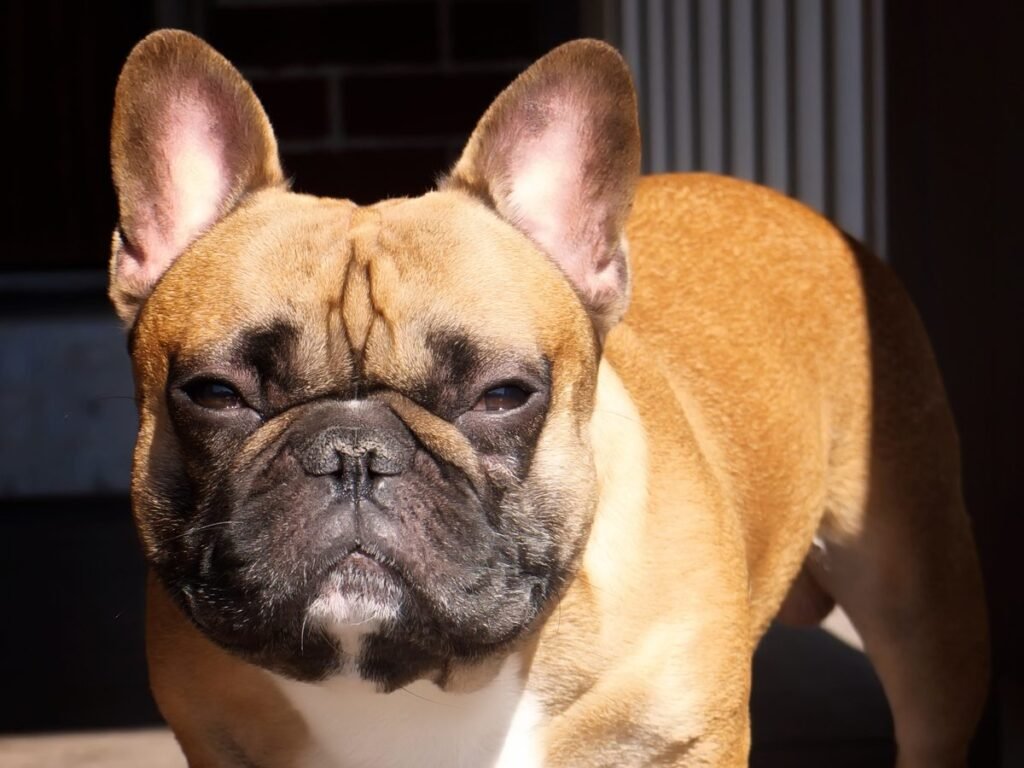
The French Bulldog is the smallest of the three and the easiest to live with in a small space. It stands 11–13 inches at the shoulder and weighs under 28 lb, with most healthy adults between about 16 and 28 lb. Its most recognisable feature is its upright bat ears, which the breed standard made its signature — no other bulldog breed has them. Its coat is short and smooth, in brindle, fawn, white and pied, and it sheds lightly.
Frenchies are playful, adaptable and smart, in the AKC’s words, and they are the most people-focused of the three breeds in daily life. They follow their owners from room to room, they are generally good with children and other dogs, and they adapt well to flats, small houses and city life — they were bred for exactly that. They are also clowns: French Bulldogs snort, snore, make an extraordinary range of noises and demand attention with a persistence that their owners tend to find charming.
Exercise needs are low to moderate. A French Bulldog is happy with two short walks a day and play indoors, and like the English Bulldog it must not be exercised in heat — its flat face makes overheating a real risk. Swimming is not an option for most French Bulldogs: they are top-heavy and poor swimmers, and they should never be left unsupervised near water.
Health follows the same pattern as the English Bulldog, with a few differences. French Bulldogs share the brachycephalic breathing risks, the skin-fold problems and the allergy tendency, and they have their own common issues, including spinal problems (hemivertebrae) and ear infections in those big upright ears. They also commonly need caesarean births, which is one reason French Bulldog puppies are expensive. Their lifespan of 10–12 years is longer than the English Bulldog’s, and their vet bills are generally lower, though still well above average for a dog of their size. The French Bulldog suits first-time owners, flat dwellers, city life and anyone who wants a bulldog’s character in the smallest, most portable package. If you are bringing a Frenchie puppy home, our French Bulldog puppy guide covers the first weeks.
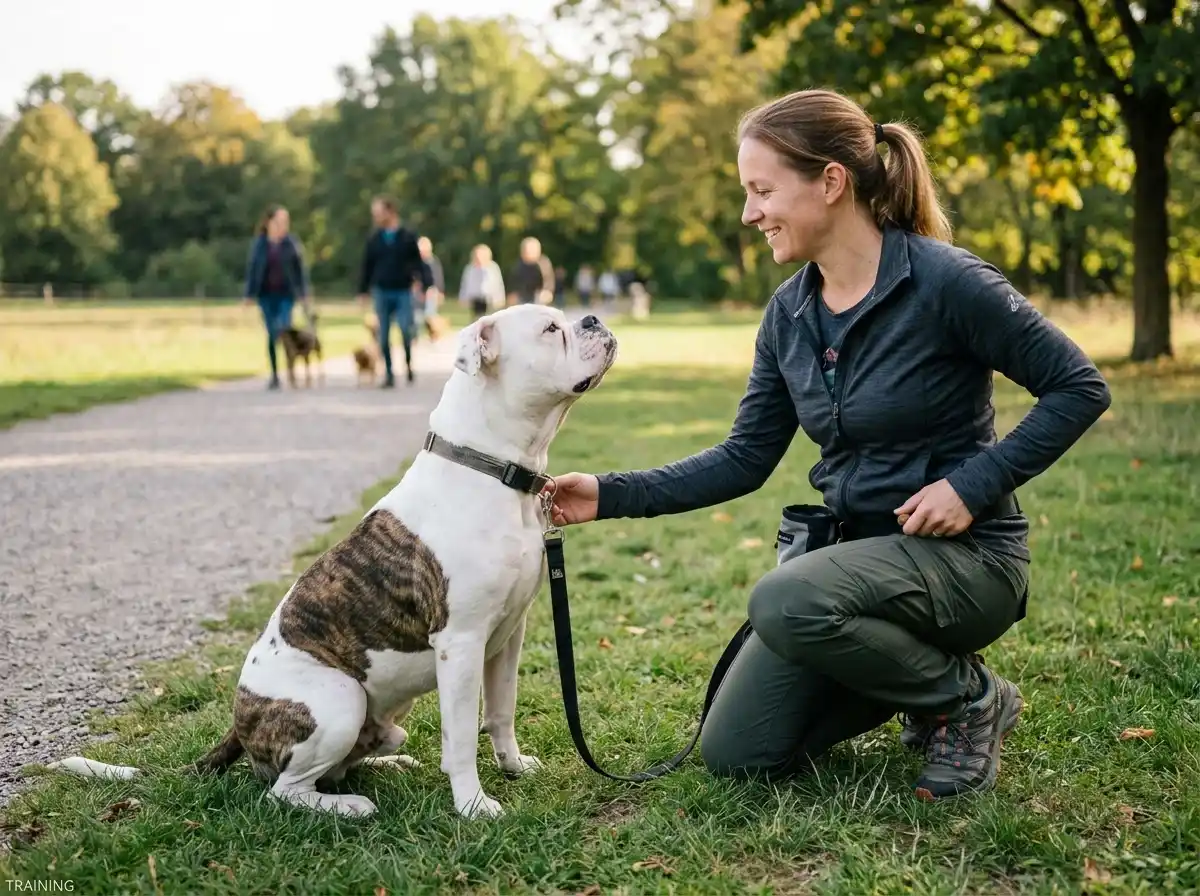
The American Bulldog
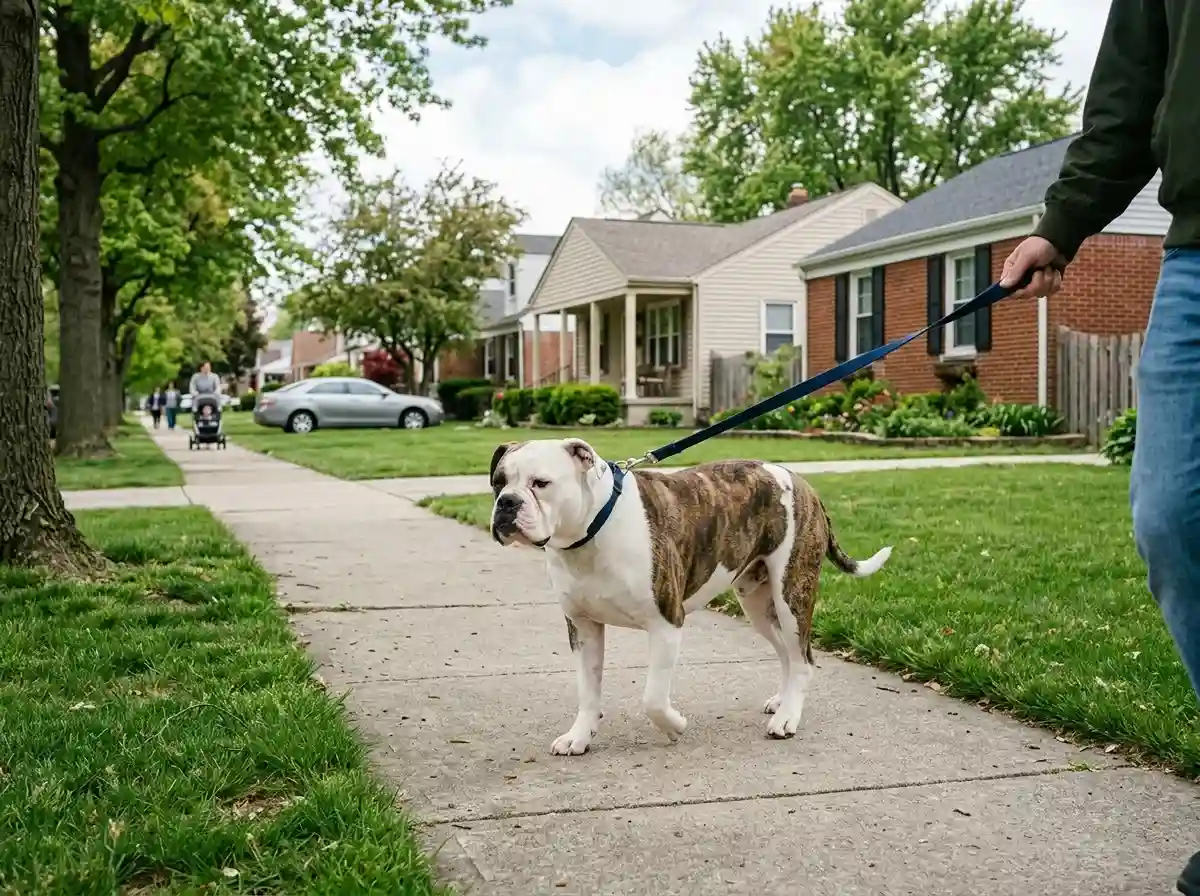
The American Bulldog is a different animal from the other two, and it is the breed most often misunderstood by people who buy one expecting a bigger English Bulldog. It stands 20–28 inches at the shoulder and weighs 60–120 lb — a large, tall, powerfully muscled working dog, not a companion breed that happens to be large. There are two broad types: the stockier Bully type and the taller, more athletic Standard type, and the type alone can shift a healthy adult weight by 10 kg or more.
Temperament is confident, loyal and protective. American Bulldogs bond strongly to their families, are usually good with children in their own household, and are naturally watchful of strangers — the guarding instinct that made them farm dogs is still there. Our guide to the American Bulldog as a guard dog covers that side of the breed in detail. They are intelligent and trainable, but they need an owner who trains consistently from puppyhood, socialises them widely, and stays in charge. This is not a breed for a first-time owner who wants an easy dog, and it is not a breed that thrives on being left alone all day.
Exercise needs are high — far higher than the other two breeds. An American Bulldog needs an hour or more of active exercise every day: long walks, running, play and training, not a stroll around the block. They also need a job, even if that job is only structured training, scent games or a long hike at the weekend. Without enough activity they gain weight, get frustrated and develop behaviour problems. They need space too: a house with a secure garden suits them far better than a flat, and the fence needs to be genuinely secure, because a bored or determined American Bulldog can jump or climb better than most owners expect.
Health is the one area where the American Bulldog has an advantage. Its longer muzzle means its breathing is generally better than the other two breeds’, and it is less prone to the worst brachycephalic problems. It is not a low-maintenance breed for health, though: hip and elbow dysplasia, skin allergies and cherry eye all occur, and at 60–120 lb, everything costs more — more food, bigger doses of medicine, a bigger crate, a stronger lead. Feeding costs alone are several times those of a French Bulldog, and our feeding guide gives the amounts by age and weight so you can see what that means in practice. The American Bulldog suits an active, experienced owner with space, time for training and a secure garden — and it rewards that owner with a loyal, capable, deeply bonded dog.
Temperament compared: which bulldog fits your lifestyle?
All three breeds are loyal, affectionate and people-focused, but they express it differently, and the difference matters day to day. The English Bulldog is calm and steady: it wants to be near you, preferably asleep, and it is happy with a quiet house. The French Bulldog is playful and demanding: it wants to be near you, preferably interacting, and it will invent ways to get your attention if you ignore it. The American Bulldog is watchful and driven: it wants to be near you, preferably doing something, and it needs that something to be provided, or it will find its own.
With children, all three can do well, with the usual rule that no dog and small child should ever be left unsupervised together. English Bulldogs are generally the most tolerant of clumsy handling, French Bulldogs are the most playful with older children, and American Bulldogs need supervision because of their size and strength — a 100 lb dog can knock a small child over by accident, however friendly it is.
Trainability is similar across the three in one respect: all of them respond to food, patience and consistency, and none of them responds well to shouting or force. The English Bulldog is the most stubborn and the least motivated by praise alone. The French Bulldog is the most food-motivated and the quickest to learn tricks. The American Bulldog is the most trainable in a working sense, but it also tests boundaries more, and it needs an owner who means what they say. If you have never trained a dog before, the French Bulldog is the most forgiving place to start.
Exercise and energy: how much activity does each bulldog need?
This is the section where the three breeds separate most clearly, and it is the one most buyers get wrong. The English and French Bulldogs are low-energy dogs. Two short walks a day — 15 to 20 minutes each — plus play at home is enough for most of them, and in warm weather even that must be shortened. The American Bulldog is a high-energy working dog that needs an hour or more of active exercise a day plus training and mental work.
Heat changes the rules for all three. Bulldogs are flat-faced, and flat-faced dogs cannot cool themselves by panting as efficiently as long-nosed dogs. On a warm day, the safe exercise window shrinks to early morning and late evening, and for the English Bulldog it shrinks furthest. Never exercise any bulldog in the heat of the day, never leave one in a warm car, and always carry water. Our heat and walking guide gives the temperature thresholds, and the walking temperature tool shows the safe limits for flat-faced breeds.
Health: what all three bulldog breeds share
All three breeds are brachycephalic, and that single fact shapes most of their health. A short muzzle means narrowed nostrils, a long soft palate and a narrow windpipe, and together those are brachycephalic obstructive airway syndrome (BOAS): noisy breathing, snoring, snorting, exercise intolerance and a real risk of overheating. The English Bulldog is affected most, the French Bulldog next, and the American Bulldog least, because its muzzle is longer — but none of the three breathes like a long-nosed dog, and all three need an owner who takes heat and exercise seriously. Our guide to bulldog breathing issues explains the signs to watch for.
Skin problems are the second shared issue. All three breeds have skin folds — the English Bulldog most of all — and folds trap moisture and bacteria, which leads to skin-fold dermatitis if they are not cleaned regularly. Allergies are common across all three breeds too, and they often show up as itchy skin, ear infections and paw licking. Hip dysplasia occurs in all three, most often in the heavier breeds, and cherry eye is common in English and French Bulldogs in particular.
None of this means bulldogs are unhealthy by definition. It means they are high-maintenance breeds, and the maintenance is mostly predictable: clean the folds, watch the breathing, keep the weight down, and see the vet promptly when something changes. Weight matters more for bulldogs than for most breeds, because every extra kilogram makes breathing harder and puts more load on the joints. That is why the weight ranges in the table above are worth taking seriously, and why our Dog Weight Calculator exists. This article is educational guidance, not veterinary advice: if your bulldog’s breathing, appetite or behaviour changes, speak to your vet.
Which bulldog is right for you?
English Bulldog vs French Bulldog: The honest answer depends on four things: your home, your activity level, your experience, and your budget for vet care.
Choose the French Bulldog if you live in a flat or a small house, you want a bulldog’s character in the smallest package, you are a first-time owner, and you want a playful, funny companion that fits city life. It is the easiest of the three to live with day to day, and the most forgiving of beginner mistakes.
Choose the English Bulldog if you want a calm, steady family dog, you have the space for a medium-sized dog, you do not mind drool, snoring and regular fold-cleaning, and you can budget for higher vet bills. It is the best choice for a quiet household that wants a loyal dog without a high exercise demand.
Choose the American Bulldog if you are active, you have a house with a secure garden, you have owned and trained dogs before, and you want a large, capable dog to train, walk and work with. It is the most rewarding of the three for the right owner — and the most demanding for the wrong one.
A few practical checks before you decide. First, meet the breed in person: visit a breed show, a rescue or a reputable breeder and spend time with adult dogs, not just puppies. Second, check the costs honestly: a French Bulldog costs more to buy, an English Bulldog costs more at the vet, and an American Bulldog costs more to feed and equip. Third, think about the next 10 to 12 years, not the next 12 months. And fourth, if you are drawn to a cross — an English and French Bulldog mix, or an American Bully and French Bulldog mix — read our mix guides first: crosses inherit a mix of both parents’ traits, including their health issues, and the result is less predictable than a pure breed.
Frequently asked questions
Are English Bulldogs and French Bulldogs the same breed?
No. They are separate breeds with different standards, sizes and histories. The French Bulldog descends from small toy English bulldogs taken to France in the 1800s, but it has been its own breed for well over a century. The most visible difference is the ears — French Bulldogs have upright bat ears, English Bulldogs have folded rose ears — and the size difference is large: a French Bulldog weighs under 28 lb, an English Bulldog 40–50 lb.
Which is bigger, an English Bulldog or a French Bulldog?
The English Bulldog is bigger in every dimension. It stands 14–15 inches at the shoulder against the French Bulldog’s 11–13 inches, and weighs 40–50 lb against the Frenchie’s under 28 lb. An adult French Bulldog weighs about the same as a six-month-old English Bulldog puppy.
Are American Bulldogs aggressive?
American Bulldogs are not aggressive by nature, but they are large, powerful, protective dogs that need experienced handling. They bond strongly to their families and are naturally watchful of strangers, which is why they were farm guard dogs. With consistent training, wide socialisation from puppyhood and an owner who sets clear rules, they are loyal and steady. Without those things, their size and guarding instinct can become a problem. They are not a good choice for a first-time owner.
Which bulldog lives the longest?
French Bulldogs and American Bulldogs both live 10–12 years on average, longer than English Bulldogs at 8–10 years. Those are breed averages and individual dogs vary, but the English Bulldog’s shorter lifespan reflects its heavier build and more extreme flat face. Good weight control, regular vet care and avoiding heat stress help every bulldog live longer.
Which bulldog is best for first-time owners?
The French Bulldog is usually the best choice for a first-time owner: it is small, adaptable, playful and forgiving of beginner mistakes, and it fits flats and city life. The English Bulldog is also manageable for a first-timer who is prepared for the vet bills and the daily fold-cleaning. The American Bulldog is not recommended for first-time owners — it needs an experienced hand, a lot of exercise and consistent training.
Can you keep a bulldog in a flat?
Yes — a French Bulldog is one of the best flat dogs there is, and an English Bulldog can do well in a flat too, as long as it gets its short daily walks and is not left alone for long stretches. An American Bulldog is not a good flat dog: it needs space, a secure garden and far more exercise than flat life usually provides.
Sources and notes: Size, weight and lifespan figures are from the American Kennel Club breed standard for the Bulldog and the French Bulldog, and the United Kennel Club standard for the American Bulldog; weight ranges match the site’s own Dog Weight Calculator dataset and the weight guide. The AKC recognised the Bulldog in 1886. Temperament descriptions follow the AKC breed standards. Brachycephalic risks follow the Merck Veterinary Manual’s guidance on brachycephalic breeds; see also the site’s guide to bulldog breathing issues. Feeding amounts by age and weight are in the site’s feeding guide. This article is educational guidance, not veterinary advice — if your bulldog’s breathing, appetite or behaviour changes, speak to your vet. The Fluffy Bulldog is run by Liam K. — read more on the About page.
Not sure where to start?
Try one of our free bulldog tools — weight, feeding, walking-temperature and more.
Browse all free tools