

Bulldog Allergies: Causes, Symptoms, and Complete Care Guide
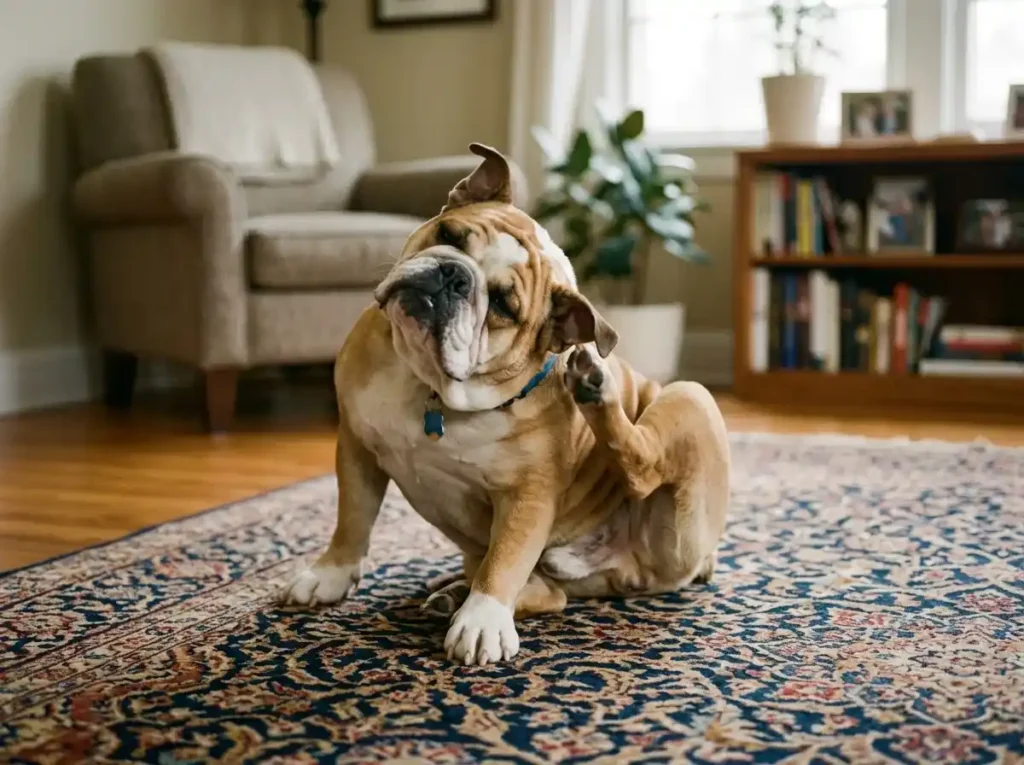
If your bulldog won’t stop scratching, has red irritated skin, or keeps getting ear infections that come back no matter what you do — allergies are probably the reason. Bulldog allergies are one of the most common health issues the breed deals with, and one of the most frustrating, because the symptoms often look like a dozen different problems before you find the actual cause.
This guide breaks down what’s actually happening when a bulldog has allergies, how to identify which type your dog is dealing with, and what care looks like in practice — from daily routines to vet visits.
Why Bulldogs Are So Prone to Skin Allergies
Bulldogs aren’t just unlucky when it comes to allergies — their anatomy and genetics make them genuinely predisposed to them. Understanding why helps you manage the problem more effectively instead of just treating symptoms in a loop.
The first reason is skin structure. Bulldogs have deep facial folds, loose skin around the neck and tail, and short dense coats. Those folds trap moisture, heat, and debris — exactly the conditions that allow yeast and bacteria to thrive. What looks like an allergy rash is sometimes a secondary skin infection caused by the fold environment, but allergies often trigger that same environment by compromising the skin barrier in the first place.
The second reason is genetic. Certain bulldog lines have been shown to have higher rates of atopic dermatitis — a chronic inflammatory skin condition driven by immune system overreaction to environmental triggers.
How Bulldog Skin Folds Make Allergies Worse
Even a mild allergic reaction that would cause minor itching in another breed can spiral quickly in a bulldog. The scratching opens up the skin, the folds trap moisture in those areas, and a secondary infection sets in — sometimes within days. This is why bulldog allergy care almost always involves fold hygiene alongside whatever treatment addresses the underlying allergy.
The Four Types of Bulldog Allergies Owners Need to Know
Not all bulldog allergies work the same way. The type determines the treatment, and misidentifying it is one of the main reasons dogs go through months of ineffective care.
Environmental Allergies (Atopy)
Environmental allergies — also called atopy or inhalant allergies — are triggered by things your dog breathes in or contacts: pollen, grass, dust mites, mold spores, and similar particles. These are seasonal in some dogs but can be year-round if the trigger is something indoors like dust mites.
Common signs: Itching concentrated on the paws, belly, armpits, and face. Paw licking is a classic indicator. Symptoms often worsen at certain times of year.
Food Allergies in Bulldogs
Food allergies develop when the immune system misidentifies a protein as a threat. The most common culprits in dogs are beef, chicken, dairy, wheat, and eggs — notably, often proteins the dog has eaten for years rather than something new.
Common signs: Chronic ear infections, gastrointestinal upset (loose stools, gas, vomiting), and itching that doesn’t follow seasonal patterns. Food allergies in bulldogs often look like skin problems first, which leads owners to treat skin when the root is diet.
Contact Allergies
Less common, but worth knowing. Contact allergies are reactions to something the dog’s skin physically touches — certain fabrics, cleaning products, rubber materials, or specific grasses. The reaction typically appears on areas with least fur coverage: the belly, paws, and chin.
Flea Allergy Dermatitis
Flea allergy dermatitis (FAD) is an allergic reaction to flea saliva, not just to flea bites. A single flea bite can trigger an intense response in a sensitized dog. The reaction concentrates near the tail base and hindquarters. Even dogs on flea prevention can react if a single flea gets through, so thorough prevention matters.
How to Identify Bulldog Allergy Symptoms Early
Bulldog allergy symptoms include persistent itching and scratching, red or inflamed skin, recurring ear infections, paw licking or chewing, hot spots, hair loss in patches, and a yeasty or musty odor from the skin or ears. Early identification of these signs — before secondary infections develop — significantly reduces how complex treatment becomes.
That’s the short answer. Here’s how to read those signs more precisely:
Ear infections that keep returning after treatment are one of the clearest indicators of an underlying allergy. The infection is the symptom; the allergy is the cause. Treating infections without addressing the allergy means they’ll come back every few weeks.
Paw licking — especially between the toes — is often the first visible sign of environmental allergies. The paws contact more allergens than almost any other part of the body, and the saliva from constant licking stains the fur a reddish-brown color.
Smell is underrated as a diagnostic signal. A yeasty, corn-chip smell from paws or ears typically means a secondary yeast overgrowth driven by allergy-related skin barrier breakdown.
Seasonal timing tells you a lot. Symptoms that worsen in spring or fall point toward environmental allergens. Year-round symptoms that don’t shift with seasons are more likely food-related or caused by indoor triggers.
How to Manage Bulldog Allergies at Home
Managing bulldog allergies at home means combining consistent skin care, dietary control, and environmental management into a routine — not a one-time fix. Most bulldogs with allergies don’t get cured; they get managed effectively enough that symptoms are minimal and their quality of life stays high.
Here’s what that routine looks like in practice:
- Clean skin folds daily or every other day — use a gentle, fragrance-free wipe or damp cloth. Dry thoroughly after cleaning, especially in deep folds. Moisture left behind promotes yeast growth.
- Wipe paws after every outdoor walk — removes contact allergens like pollen and grass before the dog tracks them inside and licks them off.
- Wash bedding weekly — in fragrance-free, dye-free detergent. Bedding accumulates dust mites and environmental allergens that the dog sleeps against for hours daily.
- Use a HEPA air purifier in rooms where the dog spends most time — reduces airborne allergen load, particularly helpful for dust mite and pollen-sensitive dogs.
- Choose a limited-ingredient diet if food allergy is suspected — only after discussing with your vet. A proper food elimination trial takes 8–12 weeks minimum and requires strict protocol to be meaningful.
- Keep up with flea prevention year-round — even in colder climates. One flea on a sensitized dog causes a disproportionate reaction.
- Bathe with an appropriate medicated or hypoallergenic shampoo — frequency depends on your dog’s specific situation; your vet can guide this. Overbathing can strip the skin barrier; underbathing leaves allergens on the coat.
Vet Treatments for Bulldog Skin Allergies
Home management helps, but moderate to severe bulldog allergies usually need veterinary support. Here’s what that typically involves:
Allergy Testing and Immunotherapy
Intradermal skin testing or blood (serum) allergy testing can identify specific environmental triggers. Once identified, the vet can develop allergen-specific immunotherapy — essentially small doses of the allergen given over time to desensitize the immune system. This is the closest thing to a long-term solution for environmental allergies.
Medications Your Vet May Prescribe
Apoquel (oclacitinib) — a targeted medication that reduces itch by blocking specific cytokines involved in the allergic response. Works quickly and is widely used for atopic dogs.
Cytopoint — an injectable antibody treatment that neutralizes one of the key itch signals. Effects last 4–8 weeks per injection.
Steroids — effective for short-term flares but generally not recommended for long-term use due to side effects. Most vets use these for acute situations rather than ongoing management.
Antifungals and antibiotics — for secondary yeast or bacterial infections that develop alongside the allergy reaction.
Common Mistakes Bulldog Owners Make with Allergies
Treating the infection instead of the allergy. Recurring ear infections or skin infections in a bulldog almost always signal an underlying allergy. Antibiotics clear the infection temporarily, but without addressing the root cause, the cycle repeats. If your dog has had the same infection more than twice, ask your vet about allergy testing.
Switching foods randomly. When owners suspect food allergies, a common instinct is to try several different foods in quick succession. This doesn’t work — a proper food trial requires a single novel protein or hydrolyzed protein diet for 8–12 weeks minimum, with zero other food sources (treats included). Switching too frequently makes it impossible to identify what’s actually causing the reaction.
Using scented products on the skin. Fragranced wipes, shampoos, or laundry detergents on bedding can act as contact allergens or irritants. Fragrance-free is non-negotiable for allergy-prone bulldogs.
Assuming symptoms will resolve on their own. Bulldog allergies are generally chronic, not self-resolving. Mild symptoms that are ignored tend to worsen as secondary infections set in. Early management is easier and cheaper than managing a dog that’s been itching and scratching for months.
Over-bathing or under-bathing. Both extremes are counterproductive. Too frequent bathing strips the skin’s protective oils; too infrequent leaves allergens sitting on the coat. Work with your vet to find the right frequency for your dog’s specific condition.
Veterinary Dermatology Journal Check for More Info
FAQ: Bulldog Allergy Questions
How do I know if my bulldog has food allergies or environmental allergies?
The clearest differentiator is timing. Environmental allergies often have a seasonal pattern or worsen after outdoor exposure. Food allergies tend to be year-round and consistent regardless of season. Ear infections and digestive symptoms alongside skin issues are more commonly associated with food allergies. A vet-guided elimination diet trial is the only reliable way to confirm food allergy.
What is the best food for a bulldog with allergies?
There’s no single best food — it depends on what your dog is actually reacting to. For suspected food allergies, a limited ingredient diet with a novel protein (one the dog hasn’t eaten before) or a hydrolyzed protein diet is the starting point. This should be done under veterinary guidance, not by guessing at the pet store.
Can bulldog allergies be cured?
Most cannot be fully cured, but they can be managed effectively. Environmental allergies are chronic but highly manageable with the right combination of home care, medication, and sometimes immunotherapy. Food allergies can essentially be resolved by identifying and permanently eliminating the trigger from the diet. The goal for most bulldogs is long-term comfort, not a cure.
At what age do bulldogs develop allergies?
Environmental allergies (atopy) typically first appear between 1–3 years of age. Food allergies can develop at any age, including in dogs that have eaten the same food for years without a previous reaction. If your young adult bulldog suddenly develops skin or ear problems, allergies are high on the differential list.
The Long Game with Bulldog Allergy Care
Bulldog allergies aren’t a problem you solve once and move on from. They’re something you learn to manage — and the owners who do it well aren’t the ones who found a miracle product. They’re the ones who built a consistent routine, worked closely with a vet who takes dermatology seriously, and paid attention to their dog’s individual patterns over time.
The symptoms are manageable. The key is catching what type of allergy you’re dealing with, not letting secondary infections become the whole story, and staying consistent with the daily care that keeps your bulldog’s skin barrier as strong as possible.
A comfortable bulldog — one that isn’t constantly itching, shaking their head, or chewing their paws — is completely achievable for most dogs with the right approach.