Short answer
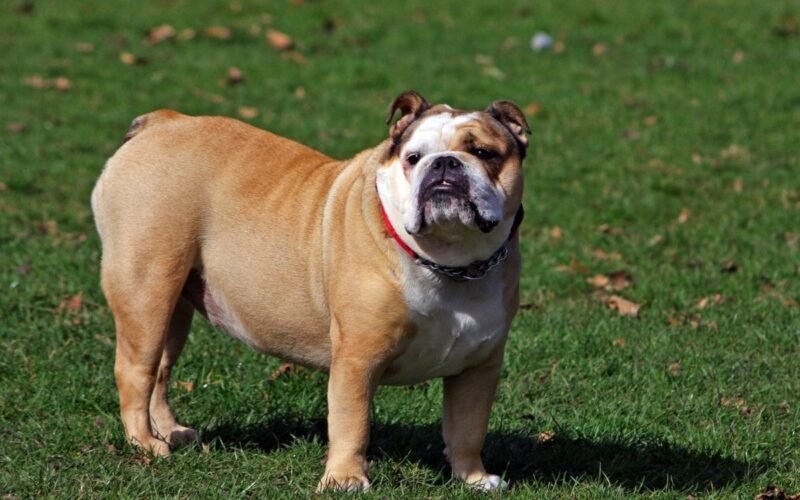
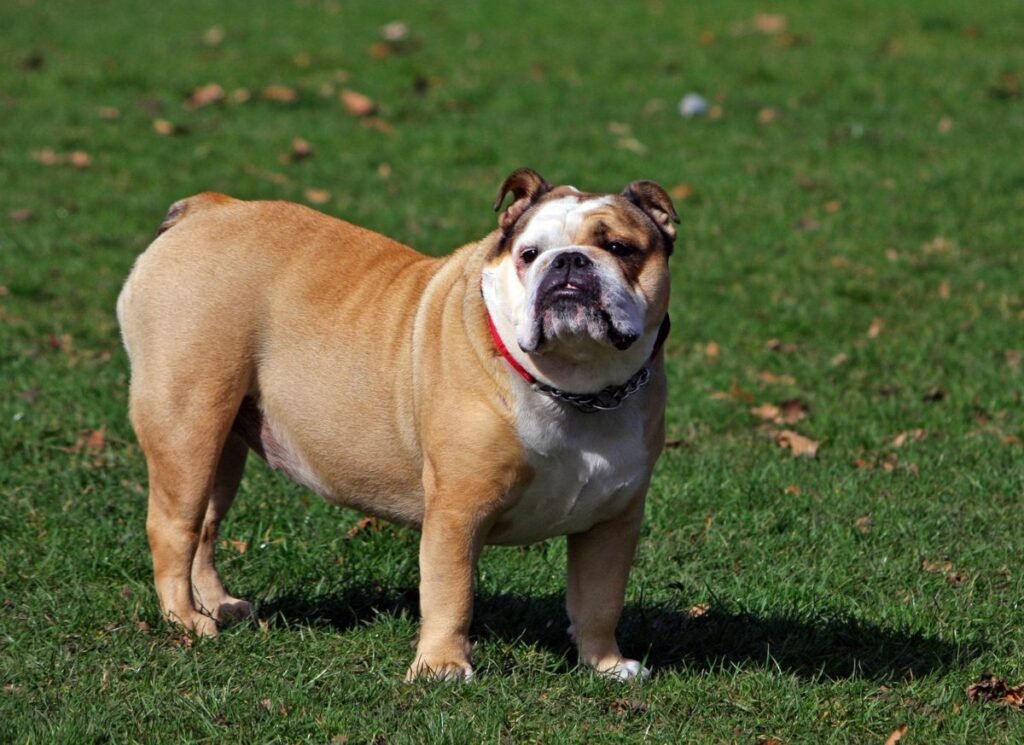
An adult English Bulldog should weigh 23–25 kg (50–55 lb) for males and 18–23 kg (40–50 lb) for females. French Bulldogs are much smaller at 7–13 kg (16–28 lb), while American Bulldogs are far bigger at 27–54 kg (60–120 lb). Puppies reach most of their adult weight by 12 months and finish filling out by 24 months.
How much should a bulldog weigh? It depends on the breed
“Bulldog” covers three very different dogs, and their healthy weights barely overlap. An adult French Bulldog can weigh less than a six-month-old English Bulldog puppy, and an American Bulldog can weigh more than twice as much as an English Bulldog. So the first step in answering how much a bulldog should weigh is knowing which bulldog you have.
The table below gives the healthy adult weight range for each of the three breeds. The English Bulldog figures come from this site’s own growth-curve data, which powers our Dog Weight Calculator, and sit alongside the American Kennel Club (AKC) breed standard of about 50 lb (23 kg) for mature males and about 40 lb (18 kg) for mature females. The French Bulldog range follows the AKC standard, which caps the breed at 28 lb (13 kg). The American Bulldog range follows the United Kennel Club (UKC) breed standard.
| Breed | Adult male | Adult female |
|---|---|---|
| English Bulldog | 23–25 kg (50–55 lb) | 18–23 kg (40–50 lb) |
| French Bulldog | 9–13 kg (20–28 lb) | 7–12 kg (16–26 lb) |
| American Bulldog | 32–54 kg (70–120 lb) | 27–45 kg (60–100 lb) |
A healthy weight is a range, not a single number. Two adult male English Bulldogs can both be perfectly healthy at 23 kg and 25 kg — build, bone structure and muscle all shift the right number for an individual dog. What matters is whether your dog sits inside the range for its breed and sex, and whether its body condition looks right (more on how to check that below). If your dog falls well outside its range in either direction, that is worth a conversation with your vet, not a crash diet or a feeding splurge.
Note that the ranges above are for adult dogs. A puppy’s weight changes every few weeks, so judging a puppy against the adult range tells you nothing. Puppies need their own chart, which is what the next section gives you.
Bulldog weight chart by age: English Bulldog puppy growth
The charts below come from the growth curves built into this site’s Dog Weight Calculator. They show the target weight — and shoulder height — for an English Bulldog puppy at each milestone from 2 months to full maturity at 24 months. The calculator compares your puppy against exactly these numbers, flagging it if the weight is more than 15% above or below the curve at its age.
Male English Bulldog weight by age
| Age | Target weight | Target height at shoulder |
|---|---|---|
| 2 months | 4.0 kg (9 lb) | 10 cm |
| 3 months | 7.0 kg (15 lb) | 15 cm |
| 4 months | 10.0 kg (22 lb) | 18 cm |
| 6 months | 15.0 kg (33 lb) | 23 cm |
| 12 months | 23.0 kg (51 lb) | 36 cm |
| 24 months (mature) | 25.0 kg (55 lb) | 39 cm |
Female English Bulldog weight by age
| Age | Target weight | Target height at shoulder |
|---|---|---|
| 2 months | 3.0 kg (7 lb) | 9 cm |
| 3 months | 6.0 kg (13 lb) | 13 cm |
| 4 months | 9.0 kg (20 lb) | 16 cm |
| 6 months | 12.0 kg (26 lb) | 21 cm |
| 12 months | 18.0 kg (40 lb) | 32 cm |
| 24 months (mature) | 20.0 kg (44 lb) | 35 cm |
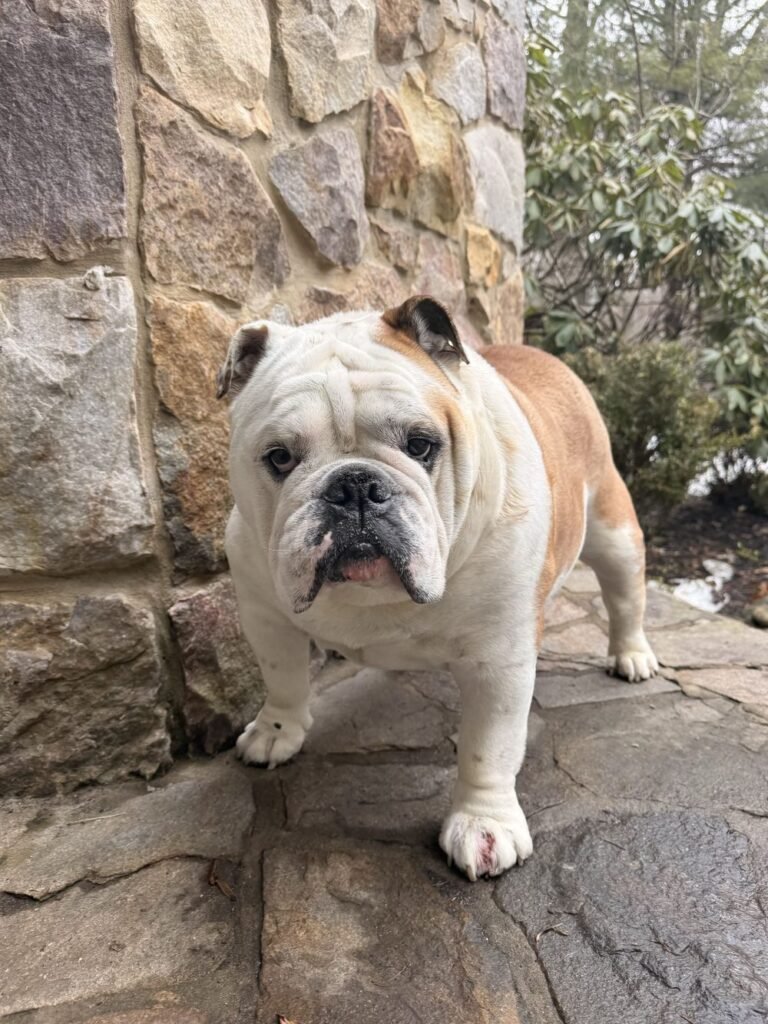 A few things to notice in these numbers. First, growth is fastest in the first six months: a male puppy nearly quadruples its weight between 2 and 6 months, from 4 kg to 15 kg. Second, males run consistently heavier than females at every age — about 3 kg heavier by 6 months and 5 kg heavier as adults. Third, the last stretch is slow: between 12 and 24 months a male gains only about 2 kg, but that is the period when the dog broadens, adds muscle and fills out its frame. A 12-month-old English Bulldog may look nearly full-grown, but it is not finished yet.
These curves are specific to the English Bulldog. French Bulldogs, American Bulldogs and mixed breeds follow different growth patterns and adult baselines, so do not judge them against this chart. A French Bulldog puppy, for example, weighs roughly half as much as an English Bulldog puppy at the same age.
Weigh your puppy on the same scale, at the same time of day, once every two weeks while it is growing. Bathroom scales work if you weigh yourself holding the puppy and subtract your own weight — just use the same method every time, because consistency matters more than precision when you are tracking a trend.
How much should a French Bulldog weigh?
An adult French Bulldog should weigh between 7 and 13 kg (16–28 lb). The AKC breed standard caps the breed at 28 lb, and most healthy adults sit between about 9 and 13 kg for males and 7 and 12 kg for females.
French Bulldogs are compact and heavily muscled for their size, so they often look heavier than the scale says — and a Frenchie carrying even 1–2 kg extra is carrying a lot relative to its frame. The same body-condition checks in the section below apply, but the margins are tighter: a single kilogram of extra weight on a 10 kg French Bulldog is 10% of its body weight, roughly the equivalent of 7 kg on a person. If you are comparing a Frenchie with an English Bulldog puppy, remember that a French Bulldog adult weighs about the same as a six-month-old English Bulldog. For more on the differences between the two breeds, see our guide to the English and French Bulldog mix, and our French Bulldog puppy care notes.
How much should an American Bulldog weigh?
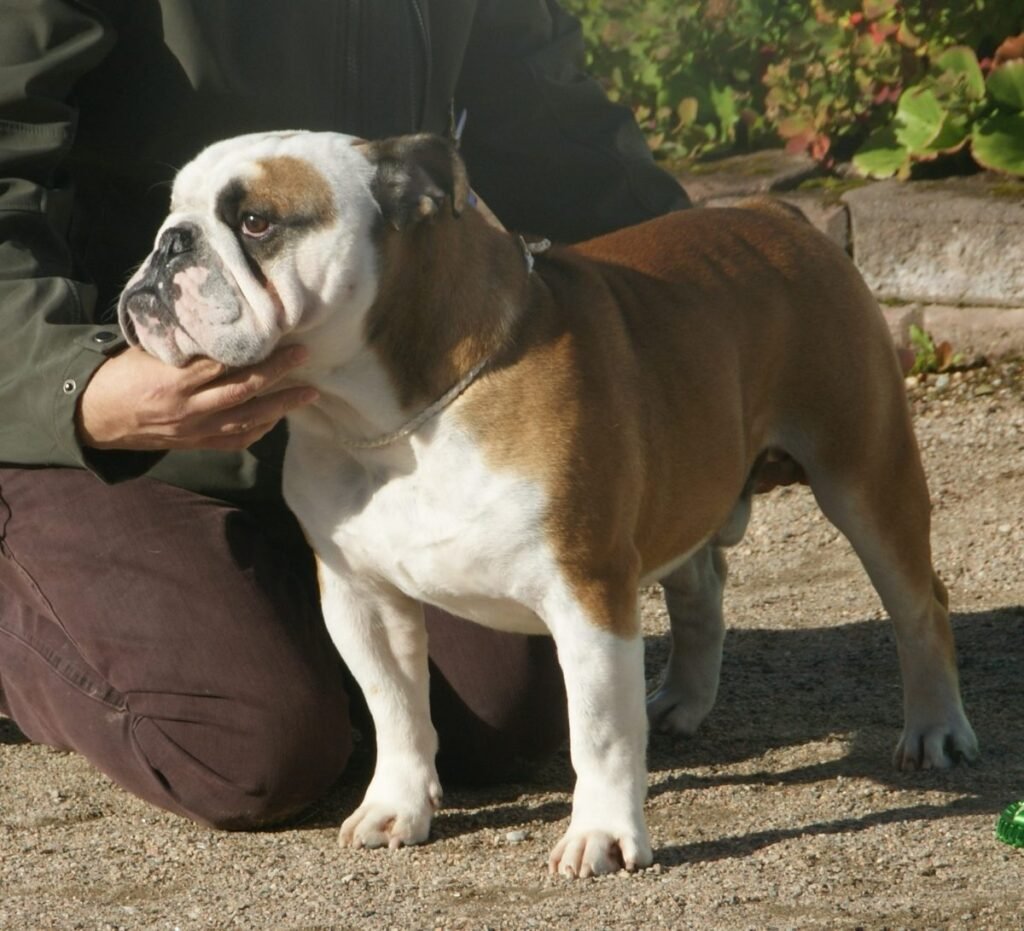
An adult American Bulldog should weigh between 27 and 54 kg (60–120 lb), with males at the top of that range and females at the bottom. The UKC breed standard puts males at roughly 32–54 kg (70–120 lb) and females at roughly 27–45 kg (60–100 lb).
American Bulldogs come in two broad types — the stockier Bully type and the taller, more athletic Standard type — and that alone can shift a healthy adult weight by 10 kg or more. Height matters here in a way it does not for the other two breeds: a tall Standard-type male at the top of the height range can be a healthy 50 kg, while the same weight on a shorter Bully-type dog could be too much. Judge an American Bulldog by its body condition and by the standard for its type, not by a single number. If you are unsure which type yours is, your vet or breeder can tell you from its build.
When do bulldogs stop growing?
English Bulldogs reach most of their adult weight by about 12 months, but they are not fully grown then. They continue to broaden, add muscle and fill out their chest and head until around 24 months, which is when their skeletal structure and mature muscle definition settle. That is why the growth charts above run to 24 months rather than stopping at a year.
French Bulldogs mature a little faster and are generally done growing by 12–14 months. American Bulldogs, being a larger breed, take longer — typically 18–24 months to reach their full adult weight and build.
A useful rule of thumb, built into our calculator, is that a puppy’s weight at 4 months roughly doubles to give its adult weight — a male English Bulldog at 10 kg at 4 months is on track for about 23–25 kg as an adult. It is a rough estimate, not a guarantee: genetics, diet and neutering all shift the final number. The calculator’s curve comparison, which checks your puppy against every milestone rather than a single rule of thumb, gives a more reliable projection.
Is my bulldog overweight? How to check
The scale gives you a number, but it cannot tell you whether that number is fat or muscle, or whether your dog’s frame is big or small for its breed. Vets use a body condition score — the 9-point scale published by the World Small Animal Veterinary Association (WSAVA) — and you can do a simplified version of the same check at home in about a minute.
The rib test. Run your hands along your bulldog’s sides with light pressure. You should be able to feel the ribs easily under a thin layer of fat, without pressing hard. If you have to push to find them, your dog is carrying too much fat. If the ribs are sharp and visible with no fat cover at all, your dog is too thin.
The waist test. Look down at your dog from above. Behind the ribs there should be a visible waist — the body should narrow before widening again at the hips. A bulldog that is straight-sided or wider at the waist than at the ribs is overweight. Bulldogs are naturally wide and barrel-chested, so the waist will be subtle, but it should still be there.
The tuck test. Look at your dog from the side. The belly should tuck upward from the chest toward the back legs. A belly that hangs level with the chest, or sags below it, means excess weight.
On the WSAVA 9-point scale, a score of 4 or 5 is ideal: ribs easily felt, waist visible from above, abdominal tuck visible from the side. Scores of 6 and 7 mean overweight; 8 and 9 mean obese. Scores of 1 to 3 mean underweight. Our Dog Weight Calculator flags a weight more than 15% above or below the growth curve at your puppy’s age — that is a useful early warning, but it is not a diagnosis. If the rib test and the scale disagree, trust the rib test and ask your vet.
Bulldogs are prone to weight gain for two reasons that are easy to underestimate. First, they are a brachycephalic (flat-faced) breed, so they tire quickly and cannot burn calories through long exercise the way a longer-nosed dog can. Second, they are famously persuasive beggars. Treats and table scraps add up fast on a dog that only needs around 700–1,200 calories a day as an adult, depending on size and activity.
What to do if your bulldog is overweight
If your bulldog is over its healthy weight range, or scores 6 or above on the body condition scale, the fix is gradual and vet-guided — never a crash diet.
- See your vet first. Rule out medical causes such as an underactive thyroid, and agree a target weight and a safe rate of loss. A safe target is usually about 1–2% of body weight per month.
- Measure the food. Weigh or measure every meal rather than estimating, and count treats as part of the daily total — treats should stay under 10% of daily calories.
- Cut calories, not meals. Dropping the daily amount by 10–20% is a typical starting point. Keep the same number of meals so your dog does not go hungry between them.
- Add gentle exercise. Short, frequent walks and play sessions suit a bulldog far better than one long outing, especially in warm weather. Flat-faced dogs overheat easily, so exercise in the cool of the morning or evening.
- Weigh weekly. Track the trend on the same scale. If the weight is not moving after three to four weeks, go back to your vet rather than cutting food further on your own.
Do not put a bulldog puppy on a weight-loss diet without veterinary guidance. Puppies need enough nutrition to grow, and restricting a growing puppy can cause lasting problems. If a puppy is above its growth curve, the answer is usually to check the food amount and the treats with your vet, not to cut meals.
What to do if your bulldog is underweight
A bulldog that is underweight — ribs visible with no fat cover, a score of 3 or below — needs a vet visit before any change in feeding. Weight loss in an adult dog can be a sign of parasites, dental pain, thyroid disease or other conditions that no amount of extra food will fix.
If your vet rules out a medical cause, the usual steps are to check that you are feeding the right amount for your dog’s weight and activity, to feed a food suited to its life stage, and to split the daily amount into three smaller meals, which many underweight dogs handle better than two large ones. Weigh weekly and expect slow, steady gains. Puppies that fall below the growth curve should also be checked by a vet — growing puppies should track along their curve, not fall away from it.
Check your bulldog’s weight with our calculator
The fastest way to put all of this together is to check your own dog against the growth curves above. Our free Dog Weight Calculator compares your bulldog puppy’s current weight and age against the English Bulldog growth data in this article and projects its adult weight, flagging it if it is more than 15% above or below the curve. Enter your puppy’s age in months, its current weight, and its sex, and you will see where it sits — and what its projected adult weight looks like. If the result surprises you, the rib test above is the next check, and your vet is the one after that.
Frequently asked questions
How much should a bulldog weigh?
An adult English Bulldog should weigh 23–25 kg (50–55 lb) for males and 18–23 kg (40–50 lb) for females. French Bulldogs weigh 7–13 kg (16–28 lb), and American Bulldogs weigh 27–54 kg (60–120 lb). Puppies are judged against age-based growth charts, not the adult range.
How much should a 6-month-old bulldog weigh?
A 6-month-old male English Bulldog should weigh about 15 kg (33 lb) and a female about 12 kg (26 lb), according to the growth curves used by our Dog Weight Calculator. French Bulldog puppies weigh roughly half as much at the same age, and American Bulldog puppies considerably more.
How much should an English Bulldog weigh in kg?
An adult male English Bulldog should weigh 23–25 kg and an adult female 18–23 kg. The AKC breed standard puts mature males at about 50 lb (23 kg) and females at about 40 lb (18 kg), which sits at the lower end of the healthy range for well-muscled dogs.
When do bulldogs stop growing?
English Bulldogs reach most of their adult weight by about 12 months but keep broadening and adding muscle until around 24 months. French Bulldogs are generally fully grown by 12–14 months, and American Bulldogs by 18–24 months.
Is my bulldog overweight?
Feel your dog’s ribs: you should be able to feel them easily under a thin fat layer. Look for a waist from above and an abdominal tuck from the side. If you cannot feel the ribs without pressing, or there is no waist, your dog is likely overweight — check its weight against the charts above and talk to your vet.
Sources and notes: Adult weight ranges are based on the American Kennel Club (AKC) breed standards for the English Bulldog and French Bulldog, the United Kennel Club (UKC) standard for the American Bulldog, and this site’s own English Bulldog growth-curve data, which powers the Dog Weight Calculator. Body condition scoring follows the WSAVA 9-point body condition scale. This article is educational and is not a substitute for veterinary advice — if you are concerned about your dog’s weight, speak to your vet. The Fluffy Bulldog is run by Liam K. — read more on the About page.
Not sure where to start?
Try one of our free bulldog tools — weight, feeding, walking-temperature and more.
Browse all free tools