

Chocolate Poisoning Symptoms in Dogs: The Full Timeline
Chocolate poisoning symptoms in dogs usually start with vomiting, diarrhea, and restlessness, then progress to a racing heartbeat, tremors, and in severe cases, seizures. Symptoms typically show up within two to four hours of eating chocolate, though smaller doses can take longer to appear.
Note: this is written as general, vet-sourced guidance for owners searching for what symptoms to expect. No specific personal incident was provided for this piece, so the examples below are framed generally rather than as a real story — if you want to add a specific dog, product, or outcome, that can be worked into the sections below.
Why Chocolate Poisoning Symptoms Take Time to Show Up
Chocolate contains theobromine, a stimulant compound that dogs metabolize far more slowly than people do. That slow breakdown is exactly why symptoms don’t hit right away — the theobromine has to build up in the bloodstream first.
This delay is also the most common reason owners get caught off guard. A dog can look completely normal for the first hour or two after eating chocolate, then start showing signs once the theobromine has had time to circulate.
Darker, less sweet chocolate (dark, baking chocolate, cocoa powder) contains far more theobromine per ounce than milk chocolate, which is why the same amount of two different chocolates can produce very different symptom severity.
Early Signs of Dog Chocolate Poisoning (First 2–4 Hours)
The earliest chocolate poisoning signs in dogs tend to be digestive rather than dramatic, which is part of why they’re easy to dismiss.
Vomiting and Diarrhea
These are usually the first symptoms to appear and can happen within the first couple of hours. On their own, they don’t confirm poisoning, but combined with known chocolate exposure, they’re a clear warning sign to act on.
Restlessness, Panting, or Excessive Thirst
Dogs may seem unusually agitated, pace more than normal, pant without an obvious reason like heat or exercise, or drink and urinate more than usual. These are signs the stimulant effect of theobromine is starting to take hold.
How to Tell If Chocolate Poisoning Is Becoming an Emergency
If your dog’s symptoms progress to a racing or irregular heartbeat, muscle tremors, or seizures, treat it as an emergency and get to a vet immediately rather than waiting to see if it passes. These signs mean theobromine levels are high enough to affect the heart and nervous system directly.
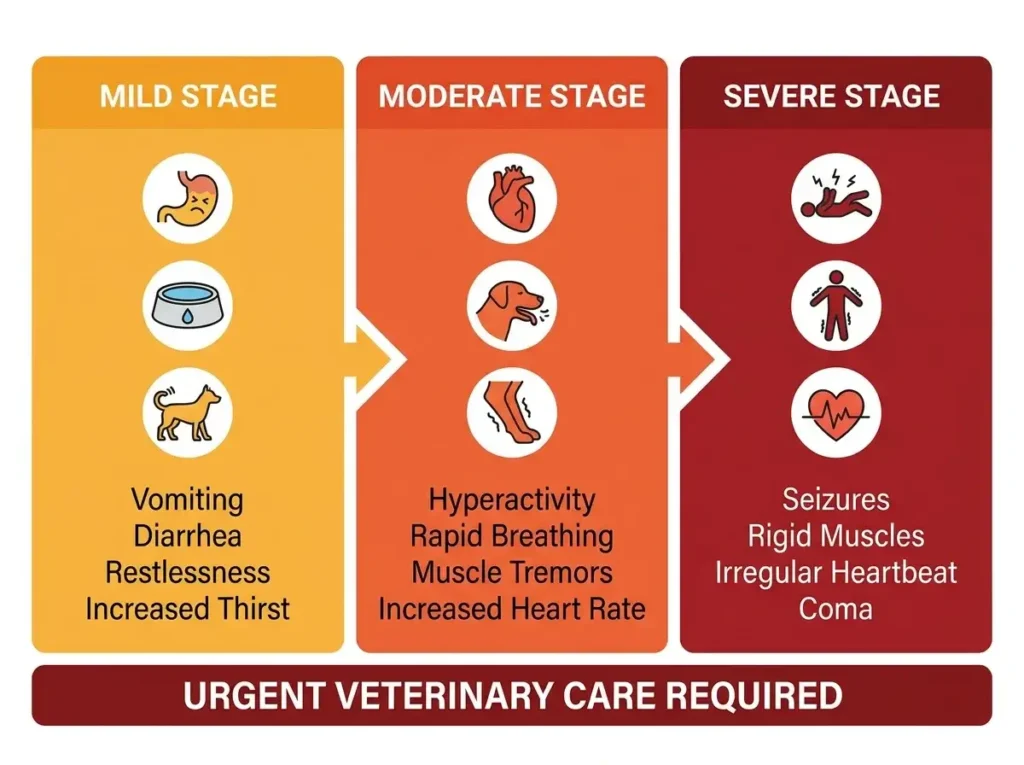
Here’s how symptoms typically escalate as the dose gets higher:
- Mild stage: vomiting, diarrhea, excessive thirst, restlessness
- Moderate stage: rapid heart rate, panting, hyperactivity, muscle tremors
- Severe stage: irregular heart rhythm, high body temperature, seizures
- Critical stage: collapse or loss of consciousness, requiring emergency hospitalization
Not every dog moves through every stage — it depends on how much chocolate, what kind, and the dog’s body weight. But if you already know your dog ate chocolate, you don’t need to wait for stage two or three to call your vet. Stage one is your cue to act.
Check Exact Toxicity Risk By Weight And Chocolate Type
What Chocolate Toxicity Symptoms Look Like By Chocolate Type
Symptom severity depends heavily on which chocolate was eaten, since theobromine concentration varies a lot between types:
- White chocolate: rarely causes true poisoning symptoms; upset stomach from fat and sugar is more likely
- Milk chocolate: a large amount is needed to produce even mild symptoms in most dogs
- Dark or semisweet chocolate: moderate amounts can produce clear symptoms, especially in smaller dogs
- Baking chocolate or cocoa powder: even a small amount can cause serious symptoms because of how concentrated the theobromine is
This is one reason two owners can describe “my dog ate chocolate” and end up with completely different risk levels — the type of chocolate matters as much as the amount.
Common Mistakes When Reading Chocolate Poisoning Symptoms
- Dismissing early vomiting as unrelated. If chocolate was involved, treat digestive symptoms as a signal, not a coincidence.
- Waiting for “obvious” symptoms like seizures before calling anyone. By that stage, the situation is already an emergency rather than a precaution.
- Assuming no symptoms in the first hour means it’s fine. Symptoms can take several hours to appear, especially with smaller doses.
- Confusing normal excitement with theobromine-driven restlessness. If panting or pacing starts shortly after a known chocolate exposure, don’t write it off as unrelated behavior.
- Not tracking how much time has passed. Symptom timing helps a vet judge how far along the poisoning is, so noting when your dog ate the chocolate is genuinely useful information.
FAQ: Chocolate Poisoning Symptoms in Dogs
How soon do chocolate poisoning symptoms start in dogs? Most symptoms appear within two to four hours of ingestion, though in some cases it can take longer, especially with smaller amounts of chocolate.
What is usually the first sign of chocolate poisoning in dogs? Vomiting and diarrhea are typically the first symptoms, often followed by restlessness, panting, or excessive thirst.
Can a dog have chocolate poisoning with no symptoms? Yes, especially in the first hour or two after eating chocolate. A dog can seem fine initially and still develop symptoms later as theobromine builds up in the bloodstream.
Are seizures always a sign of severe chocolate poisoning? Seizures typically indicate a serious level of theobromine exposure and should be treated as a medical emergency requiring immediate veterinary care.
Final Thoughts
Symptoms are a useful signal, but they’re not the thing to wait for — by the time clear symptoms show up, you’ve already lost the window where early action matters most. If you know chocolate was eaten, the smart move is calling your vet right away and using the time before symptoms appear, not after.