
American Bulldog Guard Dog: Temperament & Training Tips
An American Bulldog guard dog can be loyal, confident, and naturally protective, but that does not automatically make the breed right for every home. The real question is not only, “Will an American Bulldog protect me?” It is also, “Can I train, socialize, manage, and safely live with a powerful protective dog?”
This article is general guidance because no specific personal experience, product, method, or result was provided. If you have a real story, mistake, training result, or tool you used, add it later to make the article more personal without inventing anything.
American Bulldogs are strong, athletic dogs with working roots. Many are deeply attached to their families and naturally alert around strangers. That can be useful for home awareness, but it also means they need structure, early socialization, and calm leadership.
Is an American Bulldog Guard Dog a Good Choice for Families?
Yes, an American Bulldog can be a good guard dog for the right family, but only when the dog is well-socialized, obedience-trained, and properly managed. This breed is usually better suited as a loyal watchdog and deterrent than as a dog encouraged to act aggressively.
A good family guard dog should be steady, not reactive. It should notice unusual activity, alert the household, and remain under control when guests, children, delivery drivers, or neighbors are nearby.
That distinction matters. A protective dog breed with poor training can become a liability. A confident, well-raised American Bulldog may simply bark when someone comes to the door, then settle when told.
American Bulldogs are not usually the best fit for people who want a low-effort security dog. They need daily exercise, clear boundaries, and owners who understand that protection must be controlled, not intensified.
American Bulldog Temperament: Protective, Loyal, and Strong-Willed
American Bulldog temperament is one of the biggest reasons people consider the breed for guarding. These dogs are often loyal, courageous, and confident. They can bond closely with their household and may be naturally watchful around unfamiliar people.
That loyalty is a strength, but it can become a problem if the dog is not taught how to behave in normal social situations. A dog that cannot tell the difference between a real threat and a harmless visitor is not a reliable guard dog.
A balanced American Bulldog should be confident without being uncontrollable. You want a dog that can relax in the house, respond to commands, walk calmly on leash, and accept normal everyday situations.
American Bulldog Watchdog vs Guard Dog Behavior
A watchdog alerts you. A guard dog physically protects. For most homes, an American Bulldog is safer and more practical as a watchdog and visual deterrent.
Their size, strength, bark, and confident presence are often enough to make strangers think twice. That does not mean you should train one to bite, chase, or intimidate people.
For regular families, the goal should be controlled alertness. Your dog can bark when someone approaches, but should stop when you give a clear command.
Family Guard Dog Temperament Around Children
American Bulldogs can be affectionate with family members, but children and powerful dogs always require supervision. Even a friendly American Bulldog can accidentally knock over a child because of its strength and excitement.
Teach children not to climb on the dog, grab its face, disturb it while eating, or take toys from its mouth. At the same time, teach the dog calm behavior around kids.
A good family guard dog is not just protective. It must also be predictable, patient, and manageable.
American Bulldog Training Tips for Safe Protection
American Bulldog training should focus on obedience, socialization, impulse control, and calm confidence. Do not start by trying to make the dog “more protective.” Most American Bulldogs already have enough natural alertness.
What they need is control.
Start with basic commands such as sit, stay, come, leave it, place, and quiet. These are not tricks. They are safety tools.
A strong dog that knows “place” can be sent to a bed when guests arrive. A dog that understands “leave it” can disengage from something exciting. A dog that knows “quiet” can stop barking before it escalates.
Socialization for a Protective Dog Breed
Socialization does not mean forcing your dog to love every stranger. It means teaching the dog that normal life is not a threat.
Expose your American Bulldog to different people, sounds, surfaces, vehicles, and environments in a calm, controlled way. Reward relaxed behavior. Do not reward lunging, barking, or overexcitement.
Good socialization helps the dog stay neutral. Neutral is powerful. A neutral dog can observe without panicking or reacting.
You can check weight idea for you bulldog
Obedience Commands Every American Bulldog Guard Dog Needs
The most useful commands for an American Bulldog guard dog are simple but important:
- Come — for recall and emergency control
- Stay — for impulse control
- Place — for guests, deliveries, and busy home situations
- Leave it — to redirect attention
- Quiet — to stop unnecessary barking
- Heel — for controlled walking near people or dogs
- Drop it — for toy, food, or object control
Practice these in low-distraction settings first. Then slowly add distractions. A command your dog only follows in the living room is not fully trained yet.
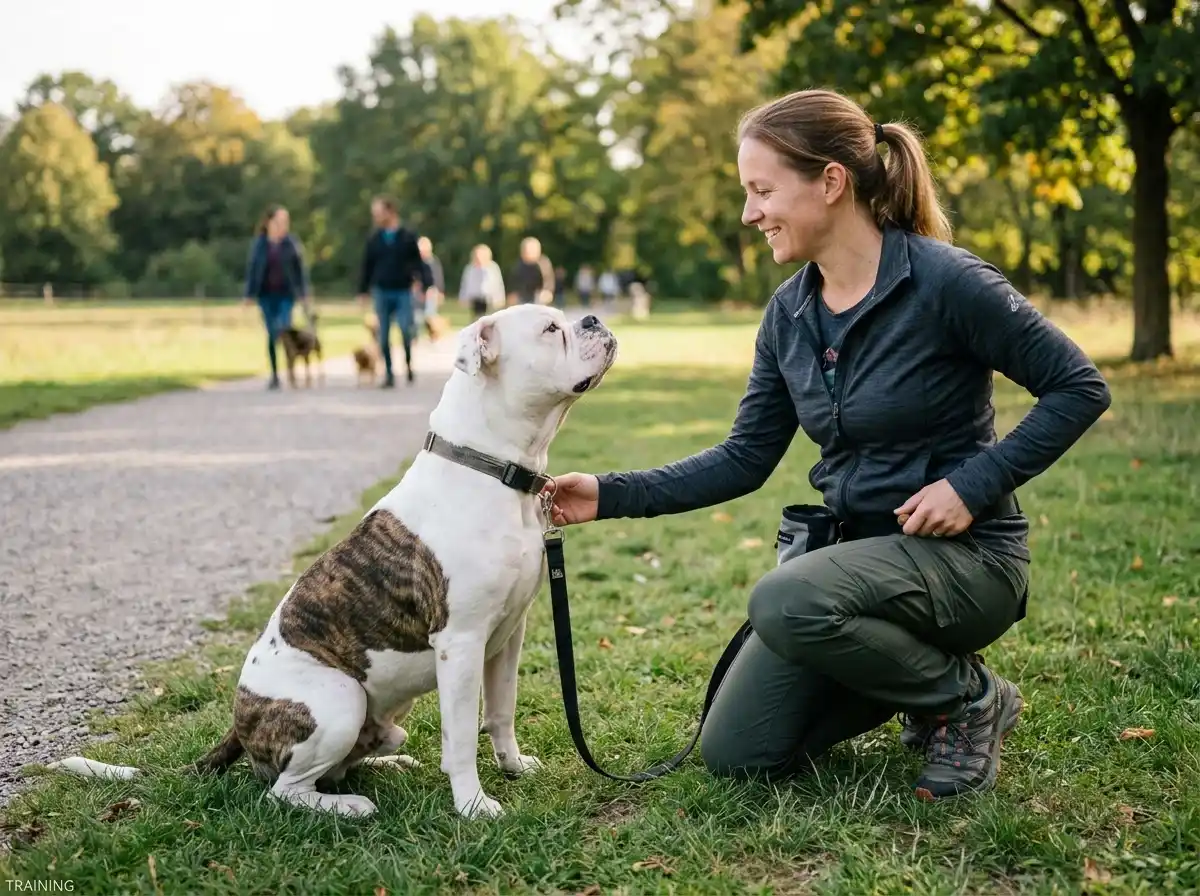
How to Train an American Bulldog Guard Dog Safely
To train an American Bulldog guard dog safely, focus on control, confidence, and calm alertness instead of aggression. Use reward-based obedience, structured socialization, daily exercise, and professional help when needed. The goal is a dog that alerts you, listens quickly, and can relax when there is no real threat.
Here is a practical training path:
- Build trust first
Your dog should see you as consistent and safe. Avoid harsh punishment that creates fear or confusion. - Teach basic obedience early
Sit, stay, come, heel, quiet, and place should become everyday habits. - Socialize with normal people and places
Let your dog experience visitors, traffic, delivery workers, other dogs, and public spaces calmly. - Reward calm alertness
If your dog notices a sound but stays controlled, reward that. Do not only react when barking becomes intense. - Control door behavior
Doorways are common trigger points. Teach your dog to go to a place, wait, or sit before guests enter. - Avoid aggression-based training
Do not encourage lunging, chasing, biting, or intimidation. That can create legal, safety, and behavior problems. - Use a qualified trainer if needed
If your American Bulldog shows fear, uncontrolled barking, growling, or lunging, get help from a qualified professional.
Real American Bulldog Guard Dog Examples and Tools
This section is general guidance because no specific real product, method, brand, trainer, or personal result was provided.
In real homes, American Bulldogs are often valued because they look confident and sound serious when they bark. For many owners, that alone is enough. A dog does not need to be aggressive to make a home feel more secure.
Useful tools for training and management may include a strong leash, well-fitted collar or harness, long line for recall practice, crate or place bed, durable chew toys, and high-value training treats.
The exact tools matter less than consistency. A good harness will not fix poor leash manners by itself. A crate will not create calm behavior unless it is introduced properly. Treats will not help if the timing is confusing.
The most important “tool” is a repeatable routine. Feed, walk, train, rest, and socialize on a schedule your dog can understand.
Common American Bulldog Guard Dog Mistakes to Avoid
The biggest mistake is assuming natural protectiveness equals reliable protection. It does not. A dog can be brave and still poorly controlled.
Another mistake is skipping socialization because you want the dog to be suspicious of strangers. That can backfire. Under-socialized dogs may become nervous, reactive, or hard to manage in normal life.
Do not encourage your American Bulldog to bark at every person who passes the house. That may feel protective at first, but it can create a dog that cannot switch off.
Avoid rough “dominance” methods. A powerful dog needs clear rules, but fear-based handling can damage trust and increase behavior problems.
Also, do not underestimate exercise. A bored American Bulldog with protective instincts can become destructive, noisy, or overly reactive. Physical activity and mental work both matter.
A short walk may not be enough for many dogs of this type. Training drills, sniff walks, tug with rules, obedience games, and structured play can help burn energy while reinforcing control.
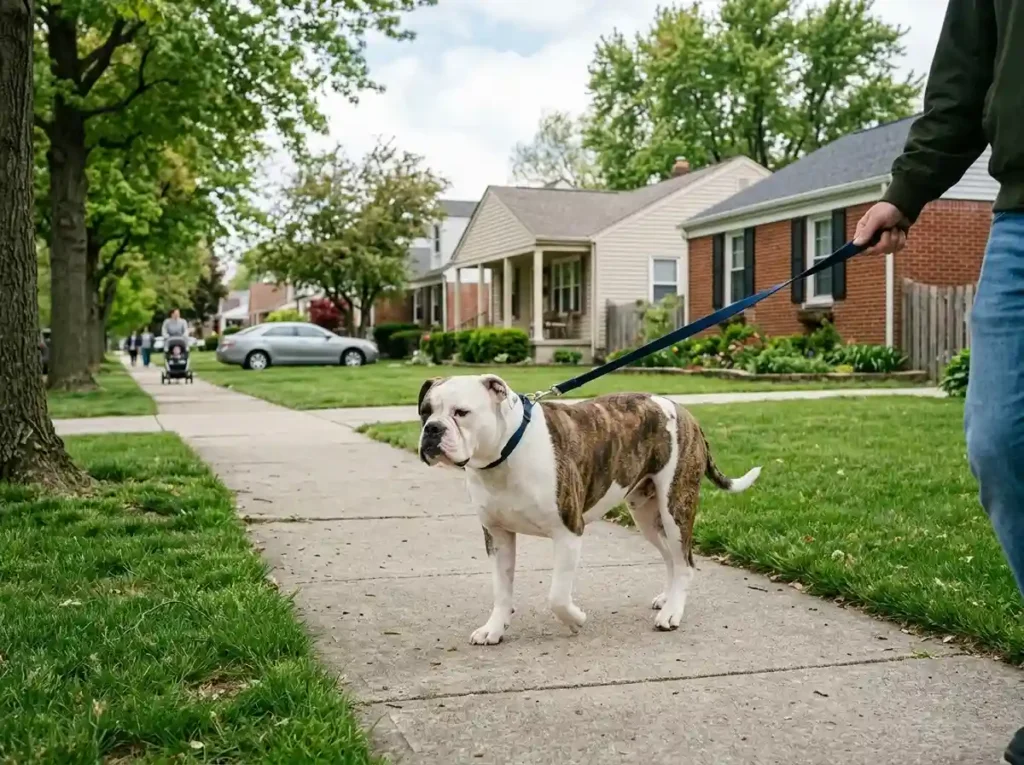
[IMAGE: American Bulldog walking calmly on leash in neighborhood | Alt text: protective dog breed walking calmly with leash training]
FAQ About American Bulldog Guard Dog Temperament
Are American Bulldogs naturally protective guard dogs?
Yes, many American Bulldogs are naturally protective and loyal to their families. That said, natural protectiveness must be shaped with training and socialization so the dog stays controlled.
Is an American Bulldog a good guard dog for first-time owners?
Usually, an American Bulldog is challenging for first-time owners unless they are committed to training, exercise, and professional guidance. Their strength and confidence require responsible handling.
Will an American Bulldog bark at strangers?
Many American Bulldogs will bark when strangers approach, especially near the home. The goal is to teach controlled alert barking, not nonstop barking or aggressive reactions.
Can an American Bulldog live safely with children?
An American Bulldog can live safely with children when properly trained, socialized, and supervised. Because the breed is strong, adults should always manage interactions between dogs and young kids.
Final Thoughts on American Bulldog Guard Dog Temperament
An American Bulldog guard dog can be loyal, brave, and impressive, but the breed needs more than a strong body and loud bark. The best American Bulldog for home protection is calm, trained, socialized, and responsive.
For most families, the ideal goal is not an aggressive guard dog. It is a confident companion that alerts you, listens to you, and knows how to relax when life is normal.
If you can provide daily structure, patient training, and safe socialization, an American Bulldog may be a strong choice. If you want a dog that will guard without much effort from you, this breed may be too much.
Add your own real training experience, mistake, result, or product here if you have one. That will make the article stronger while keeping it honest.